Air travel is a pain in the behind, there’s no getting around it. Passengers get herded onto a plane like cattle, fed like chickens and tied down to one spot like veal. And to think we pay for this privilege. I traveled for nine hours this past Sunday, but I had it better than Laz Jr. who was returning from Italy. His trip ate up 23 hours of his life and in the end, they lost his luggage for two days. Two days is a pain, but does not equal my tragic luggage escapade in Ghana (see earlier posts).
There was a full moon on Sunday which may explain a few things about passenger behavior. The moon seemed stationary off the wing and I wasn’t sure if I was in a bad Christopher Cross moment, waiting for ET to buzz by or getting a flashback of how Bill treated those Jehovah Witnesses who attempted to save him as a teenager.
I sat next to a Stage 4 talker who didn’t get a whiff of a hint that I needed my alone time, even when I put my headphones on. I do know a lot about her kids though. It also wouldn’t have mattered as I had a headphone malfunction, rendering my IPOD of no real value for the majority of my trip. I think I will take back-up precautions next trip.
Anyway, flying is boring and flying is far too lonely, even if you have an overly-friendly seatmate. As boring as flying is, it didn’t even come close to putting me to sleep as my night at the movies the evening before did. I saw “Marie Antoinette” which was directed and written by Sophia Coppola. I had hoped Sophie would surprise me again after her wonderful first film, “Lost In Translation,” despite what the critics had to say. “Marie Antoinette” was roundly booed when presented at Cannes, but I figured getting jeers from the French was more of a reason to see it than not.
I hate to admit, I side with the French. “Marie Antoinette” stunk like an unbathed Frenchman and Sophie added beaucoup d’stink with her strange direction and choice of accompanying music. Since Marie (real name: Maria Antonia Josefa Johanna von Habsburg-Lothringen, if you cared) was sent off to France to be a queen when she was 12, Coppola took the occasion to treat the film like a modern-day teen flick with “Legally Blonde” like pastel colored opening set to the music of Siouxsie & The Banshees and followed up by such music luminaries as Bow Wow Wow, Adam & The Ants and Radio Dept. Hardly the kind of 18th Century music one would have expected for such a period movie.
I know what Sophie was thinking: she wanted to present Marie as accessible to mindless moviegoers in such a way that it would seem familiar to us. In other words, she didn’t trust us enough to comprehend that this was a young queen-to-be with teenage desires for fun and frivolity. And just in case there was one person who didn’t make the connection, she hammered it home throughout the movie.
Coppola did another bit of hammering on her sole theme of the movie: that Marie was bored and confined to doing mostly boring activities. As a result, it became a boring movie about boredom – two hours of it. Lost in Coppola’s translation of the life of Marie Antoinette was the story of the French Revolution and the beginning of the French Republic. Instead the movie ends with the King and Queen leaving Versailles, giving many movie-goers the idea that she lived happily ever after in some far distant land rather than soon facing the guillotine. Yikes this movie is bad and gets no stars from this Laz.
Speaking of disappointment, I know what a lot of you are thinking. Following Tuesday’s election, you’re waiting for me to grab my gold fish and Rene Zellweger and just … FREAK OUT. But I’m not.
As you may note from an earlier post, I suggested republicans had done very little to earn another round of power from American voters – even though I don’t think democrats deserved a shot in the driver’s seat either. While I may be disappointed in the results, I think an anecdote may better express what I think will happen the next two years:
I was in Paris on the evening of an election that gave Socialist Lionel Jospin the votes to lead the French government. Jospin was anxiously watching election returns in a hotel ballroom that was adjacent to a ballroom where the center-right parties were preparing for a victory that never came. As it happened, I was camped out with the center-right folks and attempting to make use of my seven years of first-year French on grim campaigners. The main knock against the then-ruling center-right was unemployment, which had been hovering above 10 percent for most of the previous five years. Jospin had campaigned on the platform that he would increase employment by limiting the workweek for all employees to 35 hours, forcing employers to hire more people to make up for the missing five hours. Well, it sounded stupid to me too. But it didn’t to the French who bought the bad bit of economic theory and gave him the keys to the Cabinet.
When it appeared there would be no victory in our ballroom that evening, my friend Jean and I strolled next door to see what happy French women looked like. While strolling, we found ourselves near Jospin who was wiping his sweaty brow with a handkerchief and speaking with advisors. I suspect the realization that he had won was just beginning to sink in and we overheard him say to his advisors, “well, I guess the unemployment problem is our problem now.”
And that’s what I think is going through the minds of many democrats tonight. They promised “a new direction.” Many suggested significant changes in our Iraq policy and restoring oversight to the Presidency on such issues as the Patriot Act, the NSA surveillance program and curtailing torture of suspected terrorists (make them watch “Marie Antoinette” over and over, I say).
The voters, in their infinite wisdom, put the democrats back in charge and now every problem they have been beating into our heads has become their problem. In one evening of an Election Day hangover, ownership of all our ills was shifted from President Bush to the democrats and the American people will be expecting them to be fixed and fixed by New Year’s. I suspect there are a few democrats who wished they had a plan to clean up the problems (other than bringing George McGovern out of mothballs) because there is no getting around the expectations and limited patience of the American voter. Oh, and in case you’re wondering, unemployment in France went up, not down, and Jospin’s government was out at the next election. Don’t be surprised if we soon hear “Off with their heads” when fickle voters don’t believe they’re getting the Nirvana they voted for.
Saturday, November 11, 2006

Tuesday, October 31, 2006
NBA Power Rankings
This is the first of several irregular NBA Power Rankings done, in most part, to rankle my daughter who doesn’t believe I know anything about professional basketball. If it irritates others, so much the better.
Week One:
San Antonio Spurs: Well, this isn’t a difficult choice since everyone else in the world picked the Spurs at the top spot. And why not? They have one of the best and most consistent players in Tim Duncan who enters this season rested and healthy. Give him the NBA’s best coach with Gregg Popovich, the quickest player in the League in Tony Parker, Mr. Perpetual Motion in Manu Ginobili and a number of seasoned veterans who know their roles, and you have a team that should be at the top spot.
Dallas Mavericks: I hate putting them this high up because I don’t care for the players. Dirk is whining big man who lacks toughness to go inside and mix it up, Erick Dampier will mix it up but has become a cheap player, Josh Howard is one of those players that does all the annoying, but effective, things and Jason Terry is a bit too temperamental for my tastes. Oh, and they have a whack job for an owner. They do have a great coach in the Little General, Avery Johnson and he somehow makes it all work and, besides, he’s the only likeable guy in the organization.
Detroit Pistons: It wasn’t the Tigers’ year this fall nor the Pistons’ year last year, but the Detroit Shock won the WNBA Championship over the summer and that’s cause to put the men’s varsity up this high. Well, that’s not the only reason: they have really, really good players who know how to win. Yes they lost Ben Wallace and a few players like Rasheed Wallace, Dale Davis, Antonio McDyess and even Chaunchey Billups are getting a bit older, but they still have Richard Hamilton, Tayshun Prince and a couple good free agent acquisitions in Nazr Mohammed and Flip Murray. They may not beat you with flash and athleticism, but they will beat up – as long as they don’t listen to the other Flip, coach Flip Saunders.
Phoenix Suns: This team is the Ferrari in the League with speed and handling and no reason for brakes. Steve Nash still leads this team but gets plenty of help from a group that can shoot from anywhere on the floor and jump higher than Baryshnikov. They also get Amare Stoudemire back this year who can be one of the most dominant players in the League when he wants. Of course he is working his way back from micro-fracture surgery on his knee and there is a virtual boneyard of previous NBA players who never made it back from such an injury.
Denver Nuggets: Nobody has this team this high up but I want to be a bit controversial. Besides, there are a bunch of teams that fall into this second tier category and I’d rather put this young and promising team this high rather than the Clippers who never seem to live up to the hype. This last summer, the Nuggets’ Carmelo Anthony was the best and most consistent player for Team USA and he may yet prove to be the best player to come out of the LeBron, Dwayne Wade, Darko draft year. He also has a better cast around him this year with Kenyon Martin slightly happier, Marcus Camby healthier and Nene just plain healthy. He also has J.R. Smith who has a huge upside, the steady, if slow, Andre Miller at the point and a couple of hacks in Reggie “The Ballgrabber” Evans and Eduardo Najera who may keep a number of players from thinking twice before heading for the basket.
Los Angeles Clippers: If the whole team had the attitude and talent that Elton Brand squeezes out of his undersize body, they’d be on the top of the list. Sam Cassell is a proven winner but he from Mars and is as old as dirt. Shaun Livingston and Chris Kamen are supposed to have breakout years, but what Clipper isn’t? Cuttino Mobley and Rebraca (what’s the point in his first name) will provide the outside shooting with Corey Maggette the athleticism (although he really doesn’t fit this team and wouldn’t surprise me if he’s traded before the season is out). Anyway, the Clips could end up higher or lower depending on undependable factors.
Miami Heat: OK, so I cheated a bit and watched them lose to the Bulls tonight by 40. They looked old and awful and seem to depend more than ever on Dwayne Wade who scored 25 with no other player in double figures. Of course the team barely made double figures either. Shaq looks slow and disinterested, Jason Williams is hurt, James Posey only plays defense and Antoine Walker just jacks up threes to see if he can draw iron. One game does not a season make, but the most recent NBA Champions should have given back the championship rings they were handed in the pre-game ceremony out of shame.
Chicago Bulls: One game does not a season make, but I repeat myself. The Bulls look like the real deal with a solid starting lineup and pretty decent depth. Hinrich, Gordon, Deng, Nocioni and newly acquired Ben Wallace make up a formidable core of a good, young team. But that’s the problem; they are young and have never been in the spotlight like this before. Will take a wait and see approach to see how they respond to the new pressure.
Cleveland Cavaliers: The Cavs won 50 games last year because LeBron James is the best player since Michael Jordan. He still could use a little help for the team to improve on last year, but he probably didn’t get his wish as the team is made up of mostly the same has-beens and never-weres as last year.
New Jersey Nets: I was not one of those who predicted the Nets would do well last year, but they still won their weak division by January, I think. Jason Kidd looks like an old wife beater rather than a young one these days but the Nets have Vince Carter and Richard Jefferson and a much improved Nenad Krstic (get that man a vowel). They don’t have a great deal more than that, but won’t need it in the East and especially in their conference.
Houston Rockets: Go figure this team out. They have the best center in the League with Yao Ming, one of the best swingmen to play the game in Tracy McGrady and a pretty good supporting cast with Bonzi Wells and Rafer Alston. They also stole Shane Battier from Memphis who is one of those guys you need on a team if you want to get better. Battier can be counted on to play defense, get 6-7 rebounds each game, 3-4 assists, a few steals and dozens of hustle plays.
Sacramento Kings: They could be good this year or a bust. Already the injuries have diminished the roster as Mike Bibby will sit the first few weeks out sucking his thumb and Brad Miller got a little banged up at the end of pre-season. But they still have the League’s craziest player in Ron Artest who will either score or brawl with the opposing team – or his team, it’s all the same to him. Could be a breakout year for Kevin Martin and the team has more depth than last year’s team that finished strong. The Kings are still in search of a leader and probably won’t find it in their coach who you can find cleaning up the freeway in an orange vest for his drunk driving conviction. Great influence on these impressionable players, don’t you think?
Los Angeles Lakers: I just want to make sure I keep the Lakers below the Kings. It won’t last long. As soon as Kobe comes back from his injury without a corresponding rape charge he will have a team used to playing without him and one that Coach Phil Jackson will have convinced they don’t need to take his staredowns when they don’t get him the ball. Lamar Odom, the second nuttiest player in the League has improved immensely, Luke Walton is one of those Battier-type players and Kwame Brown and Andrew Bynum both look like solid big men. In the end, Kobe is the difference maker and it will be up to him to carry this team on his shoulders again. I am sure he hates that kind of attention, don’t you?
Indiana Pacers, Utah Jazz, Washington Wizards, Minnesota Timberwolves, New Orleans Hornets, Milwaukee Bucks, Orlando Magic, Golden State Warriors: All these teams are interchangeable and have the ability to move up higher in the rankings or drop down, depending on my mood and how they play. The Pacers have the third craziest player in the NBA in Stephen Jackson (third with a bullet, pardon the pun); Utah has all of its players back from injury and still has Jerry Sloan to guide them or kill them, his choice. Also Deron Williams appears to be turning into a star at the point; the Wizards can’t play defense but Gilbert Arenas and team can put up a lot of points; the Timberwolves got rid of Wally-ball, which helps, but KG’s got some mileage on him and not much help other than stat-conscious Rickey Davis; I’m not one of those big Hornet fans yet since Chris Paul seems like the only legit star on a team that made a number of off-season moves but seemed to just improve their starting lineup by 5-6 wins for this year; the Milwaukee Bucks got better in the draft and through free agency but still need more than Michael Redd to score consistently, but this team could jump up in the rankings if they can mesh well; the Magic are an intriguing team this year as Dwight Howard looks like a stud, Darko seems to be emerging from the shadows, Jameer Nelson looks like he can play and maybe Grant Hill might play a whole season; Golden State got Nellie but still has a collection of misfits. My daughter gives me the inside scoop that they may trade for AI which may help attendance if not wins.
Then there is a next group of teams not ready to do much. They include the Toronto Raptors who have a good, young and very foreign team, the Seattle Supersonics who still have Ray Allen if not an arena. The Charlotte Bobcats who at least have a Fantasy League superstar in Gerald Wallace who will probably lead the league in steals, and get his share of blocked shots, rebounds and points and play well with a good young nucleus led by Okafor and Morrison. The Memphis Grizzlies who lost their star player in Pau Gasol and did very little to help themselves while he’s out. The Allen Iverson-led Philadelphia 76ers did nothing to improve during the offseason but perhaps a less-injured, less-shooting Chris Webber will help along with hopeful improvements from Kyle Korver and Iggy.
I'm a fan of the Atlanta Hawks who are led by Joe Johnson and Josh Smith and should improve a few games this year. The Boston Celtics traded for Wally Szczerbiak and Michael Olowokandi and, except for making their team the most difficult to spell, they will do little other than add to Paul Pierce’s growing impatience. The New York Knicks are a disaster that has four point guards and five forwards and all locked into large contracts for a team that finished 41 games back last year. In other words, good luck to them. Bringing up the rear are the Portland Trailblazers who have nothing but misplaced aggression in Zach Randolf and an embarrassed owner. Zach is certain to vie with former teammate Rasheed Wallace for most technicals in League history with the new whistle-happy rules.
Did I forget anyone? Check back in a bit to see if I’m scurrying about to explain my rankings.
Week One:
San Antonio Spurs: Well, this isn’t a difficult choice since everyone else in the world picked the Spurs at the top spot. And why not? They have one of the best and most consistent players in Tim Duncan who enters this season rested and healthy. Give him the NBA’s best coach with Gregg Popovich, the quickest player in the League in Tony Parker, Mr. Perpetual Motion in Manu Ginobili and a number of seasoned veterans who know their roles, and you have a team that should be at the top spot.
Dallas Mavericks: I hate putting them this high up because I don’t care for the players. Dirk is whining big man who lacks toughness to go inside and mix it up, Erick Dampier will mix it up but has become a cheap player, Josh Howard is one of those players that does all the annoying, but effective, things and Jason Terry is a bit too temperamental for my tastes. Oh, and they have a whack job for an owner. They do have a great coach in the Little General, Avery Johnson and he somehow makes it all work and, besides, he’s the only likeable guy in the organization.
Detroit Pistons: It wasn’t the Tigers’ year this fall nor the Pistons’ year last year, but the Detroit Shock won the WNBA Championship over the summer and that’s cause to put the men’s varsity up this high. Well, that’s not the only reason: they have really, really good players who know how to win. Yes they lost Ben Wallace and a few players like Rasheed Wallace, Dale Davis, Antonio McDyess and even Chaunchey Billups are getting a bit older, but they still have Richard Hamilton, Tayshun Prince and a couple good free agent acquisitions in Nazr Mohammed and Flip Murray. They may not beat you with flash and athleticism, but they will beat up – as long as they don’t listen to the other Flip, coach Flip Saunders.
Phoenix Suns: This team is the Ferrari in the League with speed and handling and no reason for brakes. Steve Nash still leads this team but gets plenty of help from a group that can shoot from anywhere on the floor and jump higher than Baryshnikov. They also get Amare Stoudemire back this year who can be one of the most dominant players in the League when he wants. Of course he is working his way back from micro-fracture surgery on his knee and there is a virtual boneyard of previous NBA players who never made it back from such an injury.
Denver Nuggets: Nobody has this team this high up but I want to be a bit controversial. Besides, there are a bunch of teams that fall into this second tier category and I’d rather put this young and promising team this high rather than the Clippers who never seem to live up to the hype. This last summer, the Nuggets’ Carmelo Anthony was the best and most consistent player for Team USA and he may yet prove to be the best player to come out of the LeBron, Dwayne Wade, Darko draft year. He also has a better cast around him this year with Kenyon Martin slightly happier, Marcus Camby healthier and Nene just plain healthy. He also has J.R. Smith who has a huge upside, the steady, if slow, Andre Miller at the point and a couple of hacks in Reggie “The Ballgrabber” Evans and Eduardo Najera who may keep a number of players from thinking twice before heading for the basket.
Los Angeles Clippers: If the whole team had the attitude and talent that Elton Brand squeezes out of his undersize body, they’d be on the top of the list. Sam Cassell is a proven winner but he from Mars and is as old as dirt. Shaun Livingston and Chris Kamen are supposed to have breakout years, but what Clipper isn’t? Cuttino Mobley and Rebraca (what’s the point in his first name) will provide the outside shooting with Corey Maggette the athleticism (although he really doesn’t fit this team and wouldn’t surprise me if he’s traded before the season is out). Anyway, the Clips could end up higher or lower depending on undependable factors.
Miami Heat: OK, so I cheated a bit and watched them lose to the Bulls tonight by 40. They looked old and awful and seem to depend more than ever on Dwayne Wade who scored 25 with no other player in double figures. Of course the team barely made double figures either. Shaq looks slow and disinterested, Jason Williams is hurt, James Posey only plays defense and Antoine Walker just jacks up threes to see if he can draw iron. One game does not a season make, but the most recent NBA Champions should have given back the championship rings they were handed in the pre-game ceremony out of shame.
Chicago Bulls: One game does not a season make, but I repeat myself. The Bulls look like the real deal with a solid starting lineup and pretty decent depth. Hinrich, Gordon, Deng, Nocioni and newly acquired Ben Wallace make up a formidable core of a good, young team. But that’s the problem; they are young and have never been in the spotlight like this before. Will take a wait and see approach to see how they respond to the new pressure.
Cleveland Cavaliers: The Cavs won 50 games last year because LeBron James is the best player since Michael Jordan. He still could use a little help for the team to improve on last year, but he probably didn’t get his wish as the team is made up of mostly the same has-beens and never-weres as last year.
New Jersey Nets: I was not one of those who predicted the Nets would do well last year, but they still won their weak division by January, I think. Jason Kidd looks like an old wife beater rather than a young one these days but the Nets have Vince Carter and Richard Jefferson and a much improved Nenad Krstic (get that man a vowel). They don’t have a great deal more than that, but won’t need it in the East and especially in their conference.
Houston Rockets: Go figure this team out. They have the best center in the League with Yao Ming, one of the best swingmen to play the game in Tracy McGrady and a pretty good supporting cast with Bonzi Wells and Rafer Alston. They also stole Shane Battier from Memphis who is one of those guys you need on a team if you want to get better. Battier can be counted on to play defense, get 6-7 rebounds each game, 3-4 assists, a few steals and dozens of hustle plays.
Sacramento Kings: They could be good this year or a bust. Already the injuries have diminished the roster as Mike Bibby will sit the first few weeks out sucking his thumb and Brad Miller got a little banged up at the end of pre-season. But they still have the League’s craziest player in Ron Artest who will either score or brawl with the opposing team – or his team, it’s all the same to him. Could be a breakout year for Kevin Martin and the team has more depth than last year’s team that finished strong. The Kings are still in search of a leader and probably won’t find it in their coach who you can find cleaning up the freeway in an orange vest for his drunk driving conviction. Great influence on these impressionable players, don’t you think?
Los Angeles Lakers: I just want to make sure I keep the Lakers below the Kings. It won’t last long. As soon as Kobe comes back from his injury without a corresponding rape charge he will have a team used to playing without him and one that Coach Phil Jackson will have convinced they don’t need to take his staredowns when they don’t get him the ball. Lamar Odom, the second nuttiest player in the League has improved immensely, Luke Walton is one of those Battier-type players and Kwame Brown and Andrew Bynum both look like solid big men. In the end, Kobe is the difference maker and it will be up to him to carry this team on his shoulders again. I am sure he hates that kind of attention, don’t you?
Indiana Pacers, Utah Jazz, Washington Wizards, Minnesota Timberwolves, New Orleans Hornets, Milwaukee Bucks, Orlando Magic, Golden State Warriors: All these teams are interchangeable and have the ability to move up higher in the rankings or drop down, depending on my mood and how they play. The Pacers have the third craziest player in the NBA in Stephen Jackson (third with a bullet, pardon the pun); Utah has all of its players back from injury and still has Jerry Sloan to guide them or kill them, his choice. Also Deron Williams appears to be turning into a star at the point; the Wizards can’t play defense but Gilbert Arenas and team can put up a lot of points; the Timberwolves got rid of Wally-ball, which helps, but KG’s got some mileage on him and not much help other than stat-conscious Rickey Davis; I’m not one of those big Hornet fans yet since Chris Paul seems like the only legit star on a team that made a number of off-season moves but seemed to just improve their starting lineup by 5-6 wins for this year; the Milwaukee Bucks got better in the draft and through free agency but still need more than Michael Redd to score consistently, but this team could jump up in the rankings if they can mesh well; the Magic are an intriguing team this year as Dwight Howard looks like a stud, Darko seems to be emerging from the shadows, Jameer Nelson looks like he can play and maybe Grant Hill might play a whole season; Golden State got Nellie but still has a collection of misfits. My daughter gives me the inside scoop that they may trade for AI which may help attendance if not wins.
Then there is a next group of teams not ready to do much. They include the Toronto Raptors who have a good, young and very foreign team, the Seattle Supersonics who still have Ray Allen if not an arena. The Charlotte Bobcats who at least have a Fantasy League superstar in Gerald Wallace who will probably lead the league in steals, and get his share of blocked shots, rebounds and points and play well with a good young nucleus led by Okafor and Morrison. The Memphis Grizzlies who lost their star player in Pau Gasol and did very little to help themselves while he’s out. The Allen Iverson-led Philadelphia 76ers did nothing to improve during the offseason but perhaps a less-injured, less-shooting Chris Webber will help along with hopeful improvements from Kyle Korver and Iggy.
I'm a fan of the Atlanta Hawks who are led by Joe Johnson and Josh Smith and should improve a few games this year. The Boston Celtics traded for Wally Szczerbiak and Michael Olowokandi and, except for making their team the most difficult to spell, they will do little other than add to Paul Pierce’s growing impatience. The New York Knicks are a disaster that has four point guards and five forwards and all locked into large contracts for a team that finished 41 games back last year. In other words, good luck to them. Bringing up the rear are the Portland Trailblazers who have nothing but misplaced aggression in Zach Randolf and an embarrassed owner. Zach is certain to vie with former teammate Rasheed Wallace for most technicals in League history with the new whistle-happy rules.
Did I forget anyone? Check back in a bit to see if I’m scurrying about to explain my rankings.
Saturday, October 28, 2006
The DC Way Of Thinking
Washington, DC – There is a now famous map of the United States in which three-quarters is taken up by Washington, DC and the balance is labeled “everywhere else.” The map is aptly titled, “Washington’s View Of The World.”
Sitting here in a hotel room outside Washington and earning guilt points off of Italiphil (long story), I can attest to the map’s accuracy. People who live in the area feel they are at the epicenter of all that is important, and the rest of us – those who live in the quaint area they call “Flyover Country” – just can’t comprehend the complexities of real world events.
All the chit chat here is about the upcoming midterm elections. Well, perhaps chit chat is not the correct description. The elections are the only thing discussed here and the anticipation is worse than a house full of kids on Christmas Eve.
And here’s the view around here: The democrats will retake control of the House by a wide margin and the Senate will be 50/50 or, in their greatest hopes, a democrat majority. There is glee in the streets from democrat supporters who have drooled over such happenings for 12 years. The only problem with the projections is, one still has to step over the glee left from John Kerry’s certain win in 2004. The democrats are still whining over exit polls showing Kerry would be President Kerry by a comfortable margin and, rather than attempt to figure out the holes in their polling, are focused on the evils of computerized voting machines and the even more evil Ken Blackwell, the republican Secretary of State in Ohio where all was lost. In fact, there are many democrats who have not stopped their mumbling over Katherine Harris and Florida from six years ago.
All of us have been hearing for at least a year now about polls showing the popular surge of democrats. Republicans are toast, so the storyline goes. In this town, the polls are the only bible that is read and the results have become gospel. In fact, a democrat friend of mine wondered why an election is even needed; just give the win to the democrats and save the republicans from certain embarrassment.
In an environment where polls are conducted by news organizations to create news, it’s difficult to blame the democrats; the overall results look good. But the raw polling numbers are the real problem for the democrats who may again find themselves left at the altar by the voters. The key to all polls are what are known as the “cross tabs” and the “sample,” and in nearly every case, these important points are being ignored by democrats and the media once again.
Cross tabs are the assumed variables in a poll such as partisan beliefs, ethnicity, sex, income, age, etc., and the sample is the weighting of the respondents’ political affiliation and other known factors. When dealing with the most accurate polls of likely voters, the sample and cross tabs can be highly scientific and pollsters take into account dozens of previous elections to build their models. Since 1992, pollsters have oversampled democrats based on party preference stated in exit polls. Over the last 14 years, the oversample for democrats has been as low as 2 percent, but never higher than 4 percent and until recently, these polls have been statistically accurate.
This year has been far different. Major polling companies, including those used most prominently by the affiliate networks, have been oversampling democrats from 5 percent to as much as 11 percent. I have yet to read the reason for this, but it goes against all common sense to suddenly change a successful voting model. Naturally the results favor democrats, which makes news, which fuels more speculation about a huge leftward swing among voters. But it also means the polls are very likely inaccurate.
What is surprising is that this is inside political stuff that this town thrives on and most of the rest of us aren’t aware of. And it’s being ignored by the supposed democrat experts who are too busy figuring out which office to take from their republican counterparts to understand the dangers of believing their own conceits.
The other thing this town doesn’t understand is the issues that are important to most voters who don’t share the DC value system. This has best been demonstrated lately by the George Allen/Jim Webb Senate race in Virginia and the Mark Foley “scandal.”
Allen has been accused of using the “N” word dozens of years ago and using the term “Macaca” as a racial slur. When an old college football teammate of Allen’s revealed he heard him use the “N” word, there were five front page stories about it in the Washington Post and several others inside the paper. Webb jumped in the polls based on the news and there was a lot to tsk tsking by the smart people in DC who viewed this as earthshaking evidence of Allen’s lack of fitness to remain in office..
The same was true about Mark Foley. His goofball instant messages with House pages – which amounted to nothing more than pathetic longing and suggestive comments – was deemed to be a certain stain (pardon the pun) on the entire Republican Party, leading them to an ignominious defeat this November. Again, this is how things were viewed here.
The same bunch of smart people who feel republicans should be so ashamed by the actions of their own candidates that they shouldn’t bother voting, viewed the American people as prudes when President Clinton had his dalliances in the White House (sex is a private thing, in this instance), Gary Studds had a sexual relationship with his 17-year-old male page (the age of consent is 16 here in enlightened Washington) and Barney Frank had several staffers arrested for running a gay prostitution ring out of his Capitol office with his knowledge and enjoyment. To the Washingtonian, the difference between the actions of democrats and that of republicans is that republicans preach family values and the democrats have always valued the cad in the genes of their leaders. And they think you believe the same thing and ought to punish the republicans for poorly imitating the democrats.
This double standard was drilled home yesterday during a conversation with my partner, a lifelong democrat, and one of my employees, a republican who intends to vote straight party ticket for the democrats in one week. A republican consultant (and the brother of perhaps the most prominent democrat pundit) and I were talking about the publishing of bizarre passages of Jim Webb novels as widely reported in the Drudge Report. http://www.drudgereport.com/flashaw.htm. I am not even sure if Webb’s writings qualify as bizarre as they may fall more into clinical illness categories. Two things come to mind with what he wrote: as something of a writer myself, I know you would have to think these things to write about them and, who saw fit to publish this guy?
At any rate, the two of us were shaking our heads in disgust while the democrat and the faux republican were alternating between defending free speech rights and characterizing what Webb wrote as fiction and in no way defined his character. On the other hand, Foley’s internet messages were nothing to do with free speech, did define his character (of course he resigned over it, rather than seek higher office as is the case with Webb), and that George Allen’s words two decades ago – denied vehemently – were worthy of major consideration in this election.
That’s the way they really think in this town where nearly all the major news organizations and pundits are based. I don’t know what will really happen November 7 as some of this icky stuff from Washington may have rubbed off on me, but I do know that whatever happens, the people here in Washington won’t understand the belief system of we minor thinkers. But if I had to venture a guess, I believe the democrats will be scratching their heads on November 8 and wondering what happened to their insurmountable lead. And that’s what happens when you live in a city that is nothing more than an echo chamber of myopic political viewpoints. They just don’t understand the rest of us and I think it will cost them again.
Sitting here in a hotel room outside Washington and earning guilt points off of Italiphil (long story), I can attest to the map’s accuracy. People who live in the area feel they are at the epicenter of all that is important, and the rest of us – those who live in the quaint area they call “Flyover Country” – just can’t comprehend the complexities of real world events.
All the chit chat here is about the upcoming midterm elections. Well, perhaps chit chat is not the correct description. The elections are the only thing discussed here and the anticipation is worse than a house full of kids on Christmas Eve.
And here’s the view around here: The democrats will retake control of the House by a wide margin and the Senate will be 50/50 or, in their greatest hopes, a democrat majority. There is glee in the streets from democrat supporters who have drooled over such happenings for 12 years. The only problem with the projections is, one still has to step over the glee left from John Kerry’s certain win in 2004. The democrats are still whining over exit polls showing Kerry would be President Kerry by a comfortable margin and, rather than attempt to figure out the holes in their polling, are focused on the evils of computerized voting machines and the even more evil Ken Blackwell, the republican Secretary of State in Ohio where all was lost. In fact, there are many democrats who have not stopped their mumbling over Katherine Harris and Florida from six years ago.
All of us have been hearing for at least a year now about polls showing the popular surge of democrats. Republicans are toast, so the storyline goes. In this town, the polls are the only bible that is read and the results have become gospel. In fact, a democrat friend of mine wondered why an election is even needed; just give the win to the democrats and save the republicans from certain embarrassment.
In an environment where polls are conducted by news organizations to create news, it’s difficult to blame the democrats; the overall results look good. But the raw polling numbers are the real problem for the democrats who may again find themselves left at the altar by the voters. The key to all polls are what are known as the “cross tabs” and the “sample,” and in nearly every case, these important points are being ignored by democrats and the media once again.
Cross tabs are the assumed variables in a poll such as partisan beliefs, ethnicity, sex, income, age, etc., and the sample is the weighting of the respondents’ political affiliation and other known factors. When dealing with the most accurate polls of likely voters, the sample and cross tabs can be highly scientific and pollsters take into account dozens of previous elections to build their models. Since 1992, pollsters have oversampled democrats based on party preference stated in exit polls. Over the last 14 years, the oversample for democrats has been as low as 2 percent, but never higher than 4 percent and until recently, these polls have been statistically accurate.
This year has been far different. Major polling companies, including those used most prominently by the affiliate networks, have been oversampling democrats from 5 percent to as much as 11 percent. I have yet to read the reason for this, but it goes against all common sense to suddenly change a successful voting model. Naturally the results favor democrats, which makes news, which fuels more speculation about a huge leftward swing among voters. But it also means the polls are very likely inaccurate.
What is surprising is that this is inside political stuff that this town thrives on and most of the rest of us aren’t aware of. And it’s being ignored by the supposed democrat experts who are too busy figuring out which office to take from their republican counterparts to understand the dangers of believing their own conceits.
The other thing this town doesn’t understand is the issues that are important to most voters who don’t share the DC value system. This has best been demonstrated lately by the George Allen/Jim Webb Senate race in Virginia and the Mark Foley “scandal.”
Allen has been accused of using the “N” word dozens of years ago and using the term “Macaca” as a racial slur. When an old college football teammate of Allen’s revealed he heard him use the “N” word, there were five front page stories about it in the Washington Post and several others inside the paper. Webb jumped in the polls based on the news and there was a lot to tsk tsking by the smart people in DC who viewed this as earthshaking evidence of Allen’s lack of fitness to remain in office..
The same was true about Mark Foley. His goofball instant messages with House pages – which amounted to nothing more than pathetic longing and suggestive comments – was deemed to be a certain stain (pardon the pun) on the entire Republican Party, leading them to an ignominious defeat this November. Again, this is how things were viewed here.
The same bunch of smart people who feel republicans should be so ashamed by the actions of their own candidates that they shouldn’t bother voting, viewed the American people as prudes when President Clinton had his dalliances in the White House (sex is a private thing, in this instance), Gary Studds had a sexual relationship with his 17-year-old male page (the age of consent is 16 here in enlightened Washington) and Barney Frank had several staffers arrested for running a gay prostitution ring out of his Capitol office with his knowledge and enjoyment. To the Washingtonian, the difference between the actions of democrats and that of republicans is that republicans preach family values and the democrats have always valued the cad in the genes of their leaders. And they think you believe the same thing and ought to punish the republicans for poorly imitating the democrats.
This double standard was drilled home yesterday during a conversation with my partner, a lifelong democrat, and one of my employees, a republican who intends to vote straight party ticket for the democrats in one week. A republican consultant (and the brother of perhaps the most prominent democrat pundit) and I were talking about the publishing of bizarre passages of Jim Webb novels as widely reported in the Drudge Report. http://www.drudgereport.com/flashaw.htm. I am not even sure if Webb’s writings qualify as bizarre as they may fall more into clinical illness categories. Two things come to mind with what he wrote: as something of a writer myself, I know you would have to think these things to write about them and, who saw fit to publish this guy?
At any rate, the two of us were shaking our heads in disgust while the democrat and the faux republican were alternating between defending free speech rights and characterizing what Webb wrote as fiction and in no way defined his character. On the other hand, Foley’s internet messages were nothing to do with free speech, did define his character (of course he resigned over it, rather than seek higher office as is the case with Webb), and that George Allen’s words two decades ago – denied vehemently – were worthy of major consideration in this election.
That’s the way they really think in this town where nearly all the major news organizations and pundits are based. I don’t know what will really happen November 7 as some of this icky stuff from Washington may have rubbed off on me, but I do know that whatever happens, the people here in Washington won’t understand the belief system of we minor thinkers. But if I had to venture a guess, I believe the democrats will be scratching their heads on November 8 and wondering what happened to their insurmountable lead. And that’s what happens when you live in a city that is nothing more than an echo chamber of myopic political viewpoints. They just don’t understand the rest of us and I think it will cost them again.
Sunday, October 22, 2006
The Post After The Last One
(Part deux in a series. There will be no part three. Stop the applause.)
There were a number of factors leading to the breakup of the Soviet Union. Many people believe the Red Knight was dying before its ill-fated decision to fulfill its own version of manifest destiny by taking control of its neighbors, in this case Afghanistan. Even by Charlie Wilson’s own calculation, the CIA-led Mujahideen victory over the Soviets hastened its collapse by 5-10 years. By his reckoning, the accelerated fall freeing 100 million people of Eastern Europe and millions of persecuted religious and social subgroups was worth the billions of dollars and political capitol spent.
But what was the full cost of the victory? If one can’t learn the lessons of history, then apply this rule of physics: every reaction has an equal and opposite reaction. All of us are feeling that reaction in our everyday lives.
Following the victory over the Soviets in 1988, the Muj didn’t have a victory parade down the main streets of Kabul. Instead the country descended into chaos while old sectarian scores were settled among warring tribes. No longer were they fighting with old British Enfield rifles captures during the British attempt to tame the tameless. Now the factions had the best weapons the CIA could send them and the result was the destruction of nearly all the country’s infrastructure, the killing of hundreds of thousands and eventually the rise of a theocratic leadership known as the Taliban.
The presumption at the CIA was once it cut off funding to the Mujahideen, the jihad would burn itself out. If the Afghani people decided to kill each other rather than rebuild a broken nation, that was a shame but not our problem. That policy may have worked if all we left behind were weapons. Instead we left them with the spirit of the Jihad and the belief that they had won a miracle victory over the Soviets through the power of prayer and not the CIA’s 10-year assistance that turned primitive tribesmen into techno-holy warriors
Just as today in Iraq, Afghanistan of the 1980s became a draw for Jihadists from all over the Middle East. The CIA suggested as many as 30,000 foreign fighters had entered Afghanistan to chase the Soviets back across the border. As the Mujahideen and foreign holy warriors came to see it, the victory over the Soviets had little to do with the billions in cash and weapons from the CIA and Saudi Arabia, but divine intervention from Allah.
It was this invincible feeling that led the Afghani freedom fighters to turn their aim on the U.S. The coupling of Muj and the West was something of a dysfunctional arranged marriage as it was, but there were a few events that put the U.S. in the Muslim crosshairs. In 1993, the world came to know the poorest kept strategic secret of the decade: Pakistan had a nuclear weapon. Pakistan had long sought a nuke to counterbalance the weapons pointed at them by India. In fact it was India’s cozy relationship with the Soviets that prompted the Pakistanis to play middleman to the CIA and be the supply route for weapons, money and supplies for the Muj. But after the secret was out in the open, the Clinton administration cut off all foreign aid and sought sanctions. The rebuff was seen as a betrayal by the freedom fighters and more evidence to them that they were only pawns in a larger battle for control of the Middle East and its precious oil reserves. This thought was further pounded home when the U.S. decided to leave a large military contingent, including women, in Saudi Arabia following the 1991 Gulf War.
The leaders of the Afghanistan resistance to the Soviets, Gulbuddin Hekmatyar, Jalaluddin Haqani and Ahmad Massoud, were happy to take weapons from the CIA but they really didn’t like the U.S. government or the American people. Following the 9/11 attacks, Haqani – a man once described by Charlie Wilson as “goodness personified” – would emerge as the number three target of American forces in Afghanistan and Hekmatyar became a high-ranking leader of the Taliban. The mystic of both men was raised in their eyes and the eyes of the Jihad when they survived several missile attacks as Osama bin Laden later did. Massoud didn’t have much use for the Taliban and continued to fight them from the north. For this, he was seen by rivals as a tool of America and was killed when two men posing as cameramen had more bomb than film in their cameras. The assassination took place on September 10, 2001.
The collapse of the Soviet Union and the rise of militant Islam don’t fit as nicely into a neat little package as the two posts imply. However, it does paint a different picture than most people have of the factors involved in each world-altering event. It makes sense that the key architects of the Afghan battle would like to keep the details from coming to light. For Wilson and his fellow democrats, it demonstrates a 10-year history of a hypocritical foreign policy of acting like doves but sanctioning mass killings like hawks. The Islamic Jihadists would prefer to be viewed as holy warriors protected by Allah and the specter of Mohamed rather than opportunists who took our weapons, training and money and turned it all against us.
From where we stand, it’s difficult to know if we would have been better off dealing with the Soviets and the enemy we knew rather than the ghosts we are dealing with now. Future historians will tell the full story, but for now it appears that our country decided to sleep with the lions and we therefore shouldn’t be surprised that it was a dangerous and regrettable act.
There were a number of factors leading to the breakup of the Soviet Union. Many people believe the Red Knight was dying before its ill-fated decision to fulfill its own version of manifest destiny by taking control of its neighbors, in this case Afghanistan. Even by Charlie Wilson’s own calculation, the CIA-led Mujahideen victory over the Soviets hastened its collapse by 5-10 years. By his reckoning, the accelerated fall freeing 100 million people of Eastern Europe and millions of persecuted religious and social subgroups was worth the billions of dollars and political capitol spent.
But what was the full cost of the victory? If one can’t learn the lessons of history, then apply this rule of physics: every reaction has an equal and opposite reaction. All of us are feeling that reaction in our everyday lives.
Following the victory over the Soviets in 1988, the Muj didn’t have a victory parade down the main streets of Kabul. Instead the country descended into chaos while old sectarian scores were settled among warring tribes. No longer were they fighting with old British Enfield rifles captures during the British attempt to tame the tameless. Now the factions had the best weapons the CIA could send them and the result was the destruction of nearly all the country’s infrastructure, the killing of hundreds of thousands and eventually the rise of a theocratic leadership known as the Taliban.
The presumption at the CIA was once it cut off funding to the Mujahideen, the jihad would burn itself out. If the Afghani people decided to kill each other rather than rebuild a broken nation, that was a shame but not our problem. That policy may have worked if all we left behind were weapons. Instead we left them with the spirit of the Jihad and the belief that they had won a miracle victory over the Soviets through the power of prayer and not the CIA’s 10-year assistance that turned primitive tribesmen into techno-holy warriors
Just as today in Iraq, Afghanistan of the 1980s became a draw for Jihadists from all over the Middle East. The CIA suggested as many as 30,000 foreign fighters had entered Afghanistan to chase the Soviets back across the border. As the Mujahideen and foreign holy warriors came to see it, the victory over the Soviets had little to do with the billions in cash and weapons from the CIA and Saudi Arabia, but divine intervention from Allah.
It was this invincible feeling that led the Afghani freedom fighters to turn their aim on the U.S. The coupling of Muj and the West was something of a dysfunctional arranged marriage as it was, but there were a few events that put the U.S. in the Muslim crosshairs. In 1993, the world came to know the poorest kept strategic secret of the decade: Pakistan had a nuclear weapon. Pakistan had long sought a nuke to counterbalance the weapons pointed at them by India. In fact it was India’s cozy relationship with the Soviets that prompted the Pakistanis to play middleman to the CIA and be the supply route for weapons, money and supplies for the Muj. But after the secret was out in the open, the Clinton administration cut off all foreign aid and sought sanctions. The rebuff was seen as a betrayal by the freedom fighters and more evidence to them that they were only pawns in a larger battle for control of the Middle East and its precious oil reserves. This thought was further pounded home when the U.S. decided to leave a large military contingent, including women, in Saudi Arabia following the 1991 Gulf War.
The leaders of the Afghanistan resistance to the Soviets, Gulbuddin Hekmatyar, Jalaluddin Haqani and Ahmad Massoud, were happy to take weapons from the CIA but they really didn’t like the U.S. government or the American people. Following the 9/11 attacks, Haqani – a man once described by Charlie Wilson as “goodness personified” – would emerge as the number three target of American forces in Afghanistan and Hekmatyar became a high-ranking leader of the Taliban. The mystic of both men was raised in their eyes and the eyes of the Jihad when they survived several missile attacks as Osama bin Laden later did. Massoud didn’t have much use for the Taliban and continued to fight them from the north. For this, he was seen by rivals as a tool of America and was killed when two men posing as cameramen had more bomb than film in their cameras. The assassination took place on September 10, 2001.
The collapse of the Soviet Union and the rise of militant Islam don’t fit as nicely into a neat little package as the two posts imply. However, it does paint a different picture than most people have of the factors involved in each world-altering event. It makes sense that the key architects of the Afghan battle would like to keep the details from coming to light. For Wilson and his fellow democrats, it demonstrates a 10-year history of a hypocritical foreign policy of acting like doves but sanctioning mass killings like hawks. The Islamic Jihadists would prefer to be viewed as holy warriors protected by Allah and the specter of Mohamed rather than opportunists who took our weapons, training and money and turned it all against us.
From where we stand, it’s difficult to know if we would have been better off dealing with the Soviets and the enemy we knew rather than the ghosts we are dealing with now. Future historians will tell the full story, but for now it appears that our country decided to sleep with the lions and we therefore shouldn’t be surprised that it was a dangerous and regrettable act.
Friday, October 20, 2006
Getting History Wrong (Part One)
(Part One)
I have stumbled on the most interesting – and bewildering – bit of information that has changed the way I now look at recent history.
It has always been assumed that President Reagan and tough-minded republicans brought the Soviets to their knees and ended the Evil Empire. It has also become a truism that republicans in general and Bushes in particular took a good thing happening in the Middle East and messed it up for all eternity.
It turns out the punditry, along with people like me who have too much time on their hands, were all wrong. The democrats, as it turns out, should get the credit and blame for each respective geopolitical earthquake.
The nexus for both of these historic events taking place is Afghanistan. In case people other than our Olympic athletes don’t remember, the Soviets sought to protect their puppet government in Afghanistan by invading the country in 1979 to keep the government from being run out of town. Jimmy Carter, who was sort of the president at the time, met this challenge by dashing Olympian dreams and sending very serious and menacing notes to a P.O. Box inside the Soviet Union. It is uncertain if the notes were delivered as the Soviets didn’t respond, but we do know they took advantage of the lack of U.S. presence in the Moscow Olympics, winning nearly all the Gold Medals.
The invasion of Afghanistan unnerved a number of conservative republicans and moved them to flail their arms about wildly and make equally menacing statements, again to no avail. However, a little known democrat Congressman from East Texas named Charlie Wilson di d things a bit differently. Long a fighter for the underdog, Wilson took it upon himself to save the Afghan people who were being brutally wiped out by the far superior Soviet 40th Army.
Wilson did not have the power of the presidency or the ability to conduct foreign policy, but he did have the power of money as chairman of the Congressional Defense Appropriations Committee which provides, among other things, the CIA with their black money budget. Acting pretty much on his own, he decided to fund a CIA program to arm the Afghan freedom fighters, known as the Mujahideen. The CIA, still smarting from a good spanking by the Church Commission, refused the money at first because it was expected to be used in the same way that got them in trouble with Congressional oversight committees in the first place.
Undeterred, Wilson found an ally at the CIA who had a reputation for living by his own rules and before long, the Mujahideen were getting $30 million a year for food and bullets. Wilson wanted more and especially wanted the Muj to have a weapon that would bring down the Russian Hind helicopter that was killing most of the anti-government resistance. He worked out a deal with Saudi Arabia to provide matching funds to the CIA program and worked through the Pakistani Government to fund and arm the Muj. Within a few years, funding on this program exceeded $1 billion annually and the weapons provided were becoming more and more sophisticated.
All of this was being accomplished completely under the radar and at a time when the CIA was once again in trouble, along with the Reagan presidency, for funding the Nicaraguan Contras. While Oliver North was making up excuses for his bumbling around in Central America and Iran and there were few decent defense attorneys without a Reagan administration client, Wilson was accelerating his funding and weapons supplies with the tacit approval of the same democrats who were beating on republicans for doing the same thing in a different part of the world. Putting aside the hypocrisy for a moment, it was a very impressive bit of political soft-shoe by a usually drunk or drugged Wilson.
The CIA eventually became very interested in the Afghan program, in part because of all the money they were being handed and in part because it was beginning to work. The weaponry became more advanced to the point that we were arming the Muj with our most sophisticated heat-seeking Stinger missiles. The Stingers did the trick to the Hinds and suddenly the Soviets looked vulnerable and began to take heavy causalities.
Back home in the Soviet Union, the Afghan War was an unspoken thing. Because of the way the Soviets built their platoons back then, most of the soldiers in a given regiment were from the same city. With the new weapons and inventive tactics the CIA demonstrated to the Muj -- such as how to build an IED -- whole platoons of Soviet soldiers were being wiped out in a single attack. It didn’t take long to notice there were a lot of black tulips around certain towns and villages, signifying that a local soldier had been killed. The secret soon leaked out and the Soviet Union had its own Vietnam Syndrome.
By 1988, the Soviets were taking such heavy losses and the aggregate cost of fighting a war in Afghanistan and attempting to keep up with U.S. defense spending, led them to the decision to pull out of Afghanistan in disgrace and defeat. The Sovs were whipped and the world noticed, particularly in very restless Eastern Europe. The damage to Soviet prestige, battles for freedom in the Eastern Bloc, and a Carter-like malaise settling over the Russian persona proved to be too much for the repressive regime. Within two years, the Berlin Wall fell, Eastern Europe was free and the Soviet Union collapsed.
While Reagan kept the pressure on by outspending the Soviets in new defense technology, the catalyst for the fall of the Soviet Empire began with its defeat in the Hindu Kush and the Peshawar Valley of Afghanistan. And none of this would have happened without a very stubborn and creative democrat Congressman named Charlie Wilson.
(I’m tired of writing this and you are probably tired of reading it, so I will write a separte post about how our adventures in Afghanistan led to the rise in radical Islam and how it was this same Congressman who didn’t focus enough on the downside of arming the Muj.)
I have stumbled on the most interesting – and bewildering – bit of information that has changed the way I now look at recent history.
It has always been assumed that President Reagan and tough-minded republicans brought the Soviets to their knees and ended the Evil Empire. It has also become a truism that republicans in general and Bushes in particular took a good thing happening in the Middle East and messed it up for all eternity.
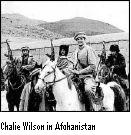
It turns out the punditry, along with people like me who have too much time on their hands, were all wrong. The democrats, as it turns out, should get the credit and blame for each respective geopolitical earthquake.
The nexus for both of these historic events taking place is Afghanistan. In case people other than our Olympic athletes don’t remember, the Soviets sought to protect their puppet government in Afghanistan by invading the country in 1979 to keep the government from being run out of town. Jimmy Carter, who was sort of the president at the time, met this challenge by dashing Olympian dreams and sending very serious and menacing notes to a P.O. Box inside the Soviet Union. It is uncertain if the notes were delivered as the Soviets didn’t respond, but we do know they took advantage of the lack of U.S. presence in the Moscow Olympics, winning nearly all the Gold Medals.
The invasion of Afghanistan unnerved a number of conservative republicans and moved them to flail their arms about wildly and make equally menacing statements, again to no avail. However, a little known democrat Congressman from East Texas named Charlie Wilson di
 d things a bit differently. Long a fighter for the underdog, Wilson took it upon himself to save the Afghan people who were being brutally wiped out by the far superior Soviet 40th Army.
Wilson did not have the power of the presidency or the ability to conduct foreign policy, but he did have the power of money as chairman of the Congressional Defense Appropriations Committee which provides, among other things, the CIA with their black money budget. Acting pretty much on his own, he decided to fund a CIA program to arm the Afghan freedom fighters, known as the Mujahideen. The CIA, still smarting from a good spanking by the Church Commission, refused the money at first because it was expected to be used in the same way that got them in trouble with Congressional oversight committees in the first place.
Undeterred, Wilson found an ally at the CIA who had a reputation for living by his own rules and before long, the Mujahideen were getting $30 million a year for food and bullets. Wilson wanted more and especially wanted the Muj to have a weapon that would bring down the Russian Hind helicopter that was killing most of the anti-government resistance. He worked out a deal with Saudi Arabia to provide matching funds to the CIA program and worked through the Pakistani Government to fund and arm the Muj. Within a few years, funding on this program exceeded $1 billion annually and the weapons provided were becoming more and more sophisticated.
All of this was being accomplished completely under the radar and at a time when the CIA was once again in trouble, along with the Reagan presidency, for funding the Nicaraguan Contras. While Oliver North was making up excuses for his bumbling around in Central America and Iran and there were few decent defense attorneys without a Reagan administration client, Wilson was accelerating his funding and weapons supplies with the tacit approval of the same democrats who were beating on republicans for doing the same thing in a different part of the world. Putting aside the hypocrisy for a moment, it was a very impressive bit of political soft-shoe by a usually drunk or drugged Wilson.
The CIA eventually became very interested in the Afghan program, in part because of all the money they were being handed and in part because it was beginning to work. The weaponry became more advanced to the point that we were arming the Muj with our most sophisticated heat-seeking Stinger missiles. The Stingers did the trick to the Hinds and suddenly the Soviets looked vulnerable and began to take heavy causalities.
Back home in the Soviet Union, the Afghan War was an unspoken thing. Because of the way the Soviets built their platoons back then, most of the soldiers in a given regiment were from the same city. With the new weapons and inventive tactics the CIA demonstrated to the Muj -- such as how to build an IED -- whole platoons of Soviet soldiers were being wiped out in a single attack. It didn’t take long to notice there were a lot of black tulips around certain towns and villages, signifying that a local soldier had been killed. The secret soon leaked out and the Soviet Union had its own Vietnam Syndrome.
By 1988, the Soviets were taking such heavy losses and the aggregate cost of fighting a war in Afghanistan and attempting to keep up with U.S. defense spending, led them to the decision to pull out of Afghanistan in disgrace and defeat. The Sovs were whipped and the world noticed, particularly in very restless Eastern Europe. The damage to Soviet prestige, battles for freedom in the Eastern Bloc, and a Carter-like malaise settling over the Russian persona proved to be too much for the repressive regime. Within two years, the Berlin Wall fell, Eastern Europe was free and the Soviet Union collapsed.
While Reagan kept the pressure on by outspending the Soviets in new defense technology, the catalyst for the fall of the Soviet Empire began with its defeat in the Hindu Kush and the Peshawar Valley of Afghanistan. And none of this would have happened without a very stubborn and creative democrat Congressman named Charlie Wilson.
(I’m tired of writing this and you are probably tired of reading it, so I will write a separte post about how our adventures in Afghanistan led to the rise in radical Islam and how it was this same Congressman who didn’t focus enough on the downside of arming the Muj.)
Thursday, October 19, 2006
Revenge Of The Nerds
 Last month Governor Schwarzenegger signed a bill into law that will require people who talk on their cell phones in their car to use a hands free device. For those of us who have driven behind some nimrod chatting away on his phone at 15 mph, this will come as welcome news.
In fact, I know I pay much less attention to my driving while I am on the phone. And it’s gotten worse since I now have all my contact information in my phone, leaving me to scroll through my phone to look for a number to call. I also get e-mail and text messages while driving and it’s very tempting to sneak a peak at the latest nonsense sent to me every time my little phone beeps telling me there is a new message. Not sure how the new law will deal with those bad habits, but I know they haven’t invented a hands free device to satisfy my
 message-based curiosity.
I only have one problem with the new law. I don’t mind hands free devices as a practical matter, but I am bothered about how goofy they make you look. How many times have you seen someone walking and wearing those ear-piece microphones, seemingly talking to themselves?
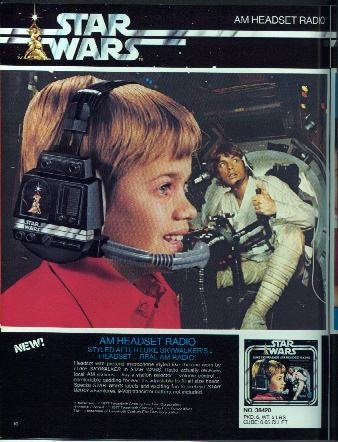
There is nothing fashionable about the headsets, either. As near as I can tell, they were designed by computer geeks who had watched one too many episodes of Star Trek or Star Wars movies. I think it is a very clever ruse by these techno-nerds as they get us all to look nerdy just so they can live out their Star Trek fantasies. And now it’s becoming law, forever requiring us all to look like a big dufus.
I can’t wait for voice activated cell phones so we can just speak commands and the phone will dial who we ask it to. Then we’ll be rid of the Star Trek and Star Wars microphone gear as we say, “Computer, please call Sladed ….” Wait a minute! That’s another Star Trek gadget! Life will never be the same.
Saturday, October 14, 2006
Overrated
Ohio State won in convincing fashion and should be the unanimous Number 1 team in the country when sportswriters go to the polls this week and vote. But which team should be Number 2? Florida, ranked second or third depending on which unfair voting system you believe, lost to Auburn tonight. Certainly they will drop in the polls like a Ricky Davis fumble at the goal line during the Rose Bowl.
University of Southern California, arguably the weakest Number 2 team ever in the history of college football rankings, barely beat a weak team from Arizona. It doesn't matter which Arizona team -- Arizo na State, University of Arizona, Northern Arizona, Scottsdale Community College -- they're all terrible and it's a huge embarrassment that USC escaped with a late touchdown AT HOME NO LESS. They looked about as sharp as white socks with a black suit tonight.
Besides the close shave USC had against a junior varsity team, they are coming off lackluster wins at unranked Washington State (28-22) and a time-conveniently-running-ou t-win at home against Washington, 26-20. I guess the Trojans should enjoy life at near the top for a short time, because I don't think they will be able to finish the season undefeated with home games against highly-ranked Oregon, Cal and Notre Dame coming up. Home games? Geez, how many home games do the Trojans get against good teams?
On a much brighter note, fourth-ranked Michigan won another game on the road in stronger fashion than the score would indicate. They defeated the tough Penn State Nittany Lions 17-10, but it took a late touchdown to make the score look close. Until the final Penn State drive, they had been held to 52 yards of total offense by the stingy Wolverine defense, which also racked up seven sacks. In the end, Penn State was held to a mere 119 yards of total offense after the Wolverines put in their second and third defensive teams leading 17-3 late in the game.
With this impressive win, along with what can only be described as an ass-pounding (can I say that in a sports story? You bet your Red Smith I can) at Notre Dame, followed by solid wins against good Big 10 teams Wisconsin, Michigan and Michigan State, Michigan should be moved up to the second spot in the rankings. I don't think there is a convincing argument otherwise.
Now I am sure there are some ignorant football fans out there from the LA area that will disagree, but USC may as well start its gradual decline in the rankings now while the big boys, Michigan and Ohio State, fight it out for the top spot.
There, I've said it. I'm pretty sure I'm right about this.
University of Southern California, arguably the weakest Number 2 team ever in the history of college football rankings, barely beat a weak team from Arizona. It doesn't matter which Arizona team -- Arizo
 na State, University of Arizona, Northern Arizona, Scottsdale Community College -- they're all terrible and it's a huge embarrassment that USC escaped with a late touchdown AT HOME NO LESS. They looked about as sharp as white socks with a black suit tonight.
Besides the close shave USC had against a junior varsity team, they are coming off lackluster wins at unranked Washington State (28-22) and a time-conveniently-running-ou
 t-win at home against Washington, 26-20. I guess the Trojans should enjoy life at near the top for a short time, because I don't think they will be able to finish the season undefeated with home games against highly-ranked Oregon, Cal and Notre Dame coming up. Home games? Geez, how many home games do the Trojans get against good teams?
On a much brighter note, fourth-ranked Michigan won another game on the road in stronger fashion than the score would indicate. They defeated the tough Penn State Nittany Lions 17-10, but it took a late touchdown to make the score look close. Until the final Penn State drive, they had been held to 52 yards of total offense by the stingy Wolverine defense, which also racked up seven sacks. In the end, Penn State was held to a mere 119 yards of total offense after the Wolverines put in their second and third defensive teams leading 17-3 late in the game.
With this impressive win, along with what can only be described as an ass-pounding (can I say that in a sports story? You bet your Red Smith I can) at Notre Dame, followed by solid wins against good Big 10 teams Wisconsin, Michigan and Michigan State, Michigan should be moved up to the second spot in the rankings. I don't think there is a convincing argument otherwise.
Now I am sure there are some ignorant football fans out there from the LA area that will disagree, but USC may as well start its gradual decline in the rankings now while the big boys, Michigan and Ohio State, fight it out for the top spot.
There, I've said it. I'm pretty sure I'm right about this.
Saturday, October 07, 2006
Friday, September 29, 2006
Birthdays and Blogging
This weekend, we’re headed to San Diego to celebrate Sladed 50th birthday. I am really looking forward to it. Not only will a bunch of us be getting to together and acting like the zero is removed from our age, but we will be able to swim together for the first time in decades and, with a little luck and better swim fins, I might even win a few sets.
I am also hoping that this weekend can be the start of the first International Blogging Summit where we weighty-thinking bloggers can get together and discuss, well, blogging. My proposal for the first agenda item is for Italiphil to show the others how we can make enough money at this so we can quit our day jobs and bore the hell out of the rest of you. Boy, that would be fun.
I am also hoping that this weekend can be the start of the first International Blogging Summit where we weighty-thinking bloggers can get together and discuss, well, blogging. My proposal for the first agenda item is for Italiphil to show the others how we can make enough money at this so we can quit our day jobs and bore the hell out of the rest of you. Boy, that would be fun.
Adrift On An Ocean Of Loneliness
A few nights ago, I spilled my guts to the missus and admitted I was feeling “adrift.” She asked me why I felt this way, but the problem with feeling adrift is you can’t answer such a question.
But I have been trying to find an answer, at least in my own mind, and I’ve come up with a few thoughts. The first is; I don’t think I know of any friend or family member who feels totally content or not somewhat adrift themselves. Or put more artfully by Paul Simon, “I don’t know a soul who’s not been battered, I don’t have a friend who feels at ease.”
For our younger generation, I understand it better. They’re anxious to get their lives started and still trying to figure out how and where they fit in. Laz Jr. had a friend visit us in our Virginia Estates and he seemed far too uncertain about his future. This is a brilliant young man on an academic scholarship to earn a masters degree at Cornell University and even he is confused. I had very little advice for him other than to tell him to get in line – none of us knows what we want to be when we grow up. Or put more artfully by Woody Allen when asked who he wanted to be when he grew up stated, “Anyone but me.”
There’s more to it with the 18-25 age group. I think it has something to do with waking up in a world where the security of our country is vulnerable for the first time since our generation was diving under our classroom seats to protect us from a Soviet nuclear attack (still not sure how our school desks would have helped but they were built pretty tough back then). We don’t get to dive under desks these day, we just have to hope that when we get on an airplane or visit Washington or New York that this particular day isn’t the one fanatics have planned to make a violent point. The kind of morbid feeling that comes with this new reality is very unsettling for all of us, but I think it hits the younger generation harder because it must make them worry about the future, and nobody should be so worried about the future when they’re young and just beginning their journey into adulthood.
Whether we like it or not, the world is at war in a different way than it has ever been at war. There are no mighty battles and hills taken to tell whose winning, and no real reason or rules for this clash of cultures gone so wrong. Both sides pray for their god to deliver a victory, but only one will be right – or worse, nobody will be right. The stretch to our imagination over this new paradigm is so disquieting that it would be perhaps more surprising to feel confident and content at the moment. At least this is one reason I must feel adrift.
I also don’t feel at all comfortable about the way the past 14 or more years have become so politically divisive. I admit I took great pleasure in watching our smug former president struggle through self-inflicted wounds caused through general hubris and male-pattern behavior. It was fun to toss a pillow at the TV set whenever his mug was front and center and engaging in some fantastic lie. But now the shoe is on the other foot and I have some appreciation for those who feel similar toward the current president. Rather than say my reaction was correct and then pass off the anger created by Bush as only from irrational opponents who just don’t get it, it’s better to just confess that these past years have been some really, really bad from a dirty politics perspective. And the worse part is; I don’t see a savior in our near future to release us from this partisan dreadfulness.
Now most people wouldn’t be too bothered by this, but to put it more artfully as Brother Bill would have done, “it burns my cookies to a crisp.” I need a break from it, and not just from one of my occupational hazards, but I need to stop listening to talk radio and, especially, stop watching the nightly news.
It is one of the reasons I like international politics so much. Instead of people asking why things aren’t going right in a campaign, I am constantly thanked by the people I work for in other countries because to them, we Americans are the experts. I sort of gag on that, because what we’ve become experts of is how best to tear down our opponents. I just read an article about President Lula in Brazil and how he’s likely to win re-election this year. It was mentioned that the campaign was marred by more negative advertising than ever before seen. That’s as far as the story goes, but I know the truth. President Lula is being advised on his campaign by Bill Clinton’s former campaign manager. There used to be a day when we exported our well-made products and imported cheap Japanese electronics. Now we’re exporting our cynical, negative, hit-piece politics and importing everything else.
I’ve also made some bad investments this year in which I relied on supposedly good friends. In the end, the investment and the friendship fell apart. In my more charitable moments, I assume there was nothing pre-planned by the friend and things just didn’t work out. At least I’d like to believe that. But I’ve experienced this too many times to fall for that generous logic. I was cheated out of a good deal of money and no amount of innocence feigned or good intentions offered will get me to change my mind. Or to put more artfully as Wilford Brimley did in Absence of Malice, “It ain't legal. And worse than that, by God it ain't right.” So I haven’t been able to find a way to forget or forgive on what happened and this adds to my angst.
I wish I could write happier, more jovial posts. I know I will someday. Most of you know me as a person of good humor who uses bad humor to irritate and entertain. I don’t feel so much in the mood these days and seem to find drifting about without a rudder more to my liking. But I think that is the way society is going and perhaps I am just responding to the mood of the current culture. I wonder if I am correct about others out there who feel the same way. If so, drop me a line and tell me. If not, I would especially like to hear from you.
But I have been trying to find an answer, at least in my own mind, and I’ve come up with a few thoughts. The first is; I don’t think I know of any friend or family member who feels totally content or not somewhat adrift themselves. Or put more artfully by Paul Simon, “I don’t know a soul who’s not been battered, I don’t have a friend who feels at ease.”
For our younger generation, I understand it better. They’re anxious to get their lives started and still trying to figure out how and where they fit in. Laz Jr. had a friend visit us in our Virginia Estates and he seemed far too uncertain about his future. This is a brilliant young man on an academic scholarship to earn a masters degree at Cornell University and even he is confused. I had very little advice for him other than to tell him to get in line – none of us knows what we want to be when we grow up. Or put more artfully by Woody Allen when asked who he wanted to be when he grew up stated, “Anyone but me.”
There’s more to it with the 18-25 age group. I think it has something to do with waking up in a world where the security of our country is vulnerable for the first time since our generation was diving under our classroom seats to protect us from a Soviet nuclear attack (still not sure how our school desks would have helped but they were built pretty tough back then). We don’t get to dive under desks these day, we just have to hope that when we get on an airplane or visit Washington or New York that this particular day isn’t the one fanatics have planned to make a violent point. The kind of morbid feeling that comes with this new reality is very unsettling for all of us, but I think it hits the younger generation harder because it must make them worry about the future, and nobody should be so worried about the future when they’re young and just beginning their journey into adulthood.
Whether we like it or not, the world is at war in a different way than it has ever been at war. There are no mighty battles and hills taken to tell whose winning, and no real reason or rules for this clash of cultures gone so wrong. Both sides pray for their god to deliver a victory, but only one will be right – or worse, nobody will be right. The stretch to our imagination over this new paradigm is so disquieting that it would be perhaps more surprising to feel confident and content at the moment. At least this is one reason I must feel adrift.
I also don’t feel at all comfortable about the way the past 14 or more years have become so politically divisive. I admit I took great pleasure in watching our smug former president struggle through self-inflicted wounds caused through general hubris and male-pattern behavior. It was fun to toss a pillow at the TV set whenever his mug was front and center and engaging in some fantastic lie. But now the shoe is on the other foot and I have some appreciation for those who feel similar toward the current president. Rather than say my reaction was correct and then pass off the anger created by Bush as only from irrational opponents who just don’t get it, it’s better to just confess that these past years have been some really, really bad from a dirty politics perspective. And the worse part is; I don’t see a savior in our near future to release us from this partisan dreadfulness.
Now most people wouldn’t be too bothered by this, but to put it more artfully as Brother Bill would have done, “it burns my cookies to a crisp.” I need a break from it, and not just from one of my occupational hazards, but I need to stop listening to talk radio and, especially, stop watching the nightly news.
It is one of the reasons I like international politics so much. Instead of people asking why things aren’t going right in a campaign, I am constantly thanked by the people I work for in other countries because to them, we Americans are the experts. I sort of gag on that, because what we’ve become experts of is how best to tear down our opponents. I just read an article about President Lula in Brazil and how he’s likely to win re-election this year. It was mentioned that the campaign was marred by more negative advertising than ever before seen. That’s as far as the story goes, but I know the truth. President Lula is being advised on his campaign by Bill Clinton’s former campaign manager. There used to be a day when we exported our well-made products and imported cheap Japanese electronics. Now we’re exporting our cynical, negative, hit-piece politics and importing everything else.
I’ve also made some bad investments this year in which I relied on supposedly good friends. In the end, the investment and the friendship fell apart. In my more charitable moments, I assume there was nothing pre-planned by the friend and things just didn’t work out. At least I’d like to believe that. But I’ve experienced this too many times to fall for that generous logic. I was cheated out of a good deal of money and no amount of innocence feigned or good intentions offered will get me to change my mind. Or to put more artfully as Wilford Brimley did in Absence of Malice, “It ain't legal. And worse than that, by God it ain't right.” So I haven’t been able to find a way to forget or forgive on what happened and this adds to my angst.
I wish I could write happier, more jovial posts. I know I will someday. Most of you know me as a person of good humor who uses bad humor to irritate and entertain. I don’t feel so much in the mood these days and seem to find drifting about without a rudder more to my liking. But I think that is the way society is going and perhaps I am just responding to the mood of the current culture. I wonder if I am correct about others out there who feel the same way. If so, drop me a line and tell me. If not, I would especially like to hear from you.
Friday, September 22, 2006
Assessing Blame
For a little while, or at least for the time I was working up the urge to write again, I have been thinking about the geopolitical cauldron that we have collectively been sitting around and dangling our feet over the edge. Let’s face it; we’re a few BTUs away from the pot boiling over.
The best way to excuse all the uncertainty and violence around the world is to claim, “Bush started it all by invading Iraq.” Or better, “Bush started it all by being elected.” Well, that’s a bit too simplistic and makes it far too convenient for most Americans to wrap it all up as if it were a 30-minute sitcom. Consider the following:
As day broke on September 11, 2001, President Bush had some of the most inconsequential goals of any modern president. He merely wanted to use the federal government to improve educational opportunities and behave as an amorphous “compassionate conservative.” He was even reading to school children while 19 Muslim fanatics were slitting the throats of flight attendants and pilots before crashing their hijacked planes into the World Trade Center and the Pentagon. What did President Bush do to encourage this unthinkable act? Did they not like his education policy? Were the books he was reading to schoolchildren offensive? We’re they still feeling disenfranchised about the Florida recount?
We all know now – at least 70 percent of us still believe this – that these 19 men, financed by Osama bid Laden, had been planning the attacks for three years prior to Bush taking office. We also know from captured data and public statements that the attacks were done to measure American resolve after we left Somalia with our tails tucked in, decided not to do anything in Rwanda and almost completely ignored the bombing of the USS Cole. None of this has anything to do with Bush.
In Palestine, hostilities didn’t begin when Bush took office. It’s difficult to find a time during the past 50 years when there wasn’t violence among the closely nestled ethnic and religious combatants. The upswing in violence in the disputed territories began in September 2000 when Al Gore had a six-point lead in national polls. This was called the Second Intifada, and it was the second because there was a First Intifada in 1987 that ended in 1993 with the signing of the Oslo Accords which got Yassar Arafat a Nobel Peace Prize (does the weird Norwegian guy ever take back the peace prize when he’s goofed up like this?). Thousands died in each of these uprisings but, again, what does President Bush have to do with this?
North Korea, which Americans had heard little about until they were named as part of the infamous Axis of Evil trio, had been giving the Clinton Administration fits over their nuclear weapon ambitions. President Clinton was at such a loss on how to deal with a leader who kept his nation locked in the basement that he sent former President Carter to surrender on his behalf.
While President Clinton may have secretly hoped the North Koreans would kidnap Carter to keep him from hanging around outside the Oval Office, he must have been satisfied when Carter returned with a document declaring the North Koreans would give up building a nuclear arms program. At least he was happy until he got the bill on the several billion dollar incentive package Carter offered the North Korean regime so they would sign a document proclaiming they would never again think of ways to blow up the world. This, in the practiced art of statecraft is called “paper diplomacy” and, like similar treaties, a hearty handshake and a statement about their word being their bond may have produced similar results and saved a few pounds of paper.
As we have since learned, the North Koreans never stopped their nuclear programs and when they had run through the original billions in American taxpayer support, they declared themselves very, very bad liars and cheats. This not so stunning admission led to a request for comparable American diplomacy and, as long as it came with a check with at least nine zeros, they would agree to be good again. All that was left was a document to sign.
This request, however, came while Bush was president and Carter was off stirring up trouble elsewhere and so no ransom was paid. This caused North Korean leader Kim Jeong-il to pout and saber rattle for the next few years. I suppose Bush could have given Kim some payola to stay out of our hair a while, but I fail to see how North Korean goofiness is due to Bush policies or American lunacy for electing him.
Of course we all know we have trouble in Iran, or at least we think we do. There is a rumor Iran is building a nuclear weapons program but their leader, who didn’t even win the Most Wacky Dictator award at the recent U.N. American Bashathon, claims these are dirty lies by Imperialist Occupiers and their Zionist collaborators.
As much as we want to give President Ahmadinejad and his religious leaders the benefit of the doubt, Iran’s claim that it’s nuclear program is for generating electrical power does stretch credibility a tad. In a country that produces more oil than it can dump in American SUVs and possesses an abundance of hydro power, it’s difficult to imagine Iran needing nuclear power and even more puzzling that it needs to place the components for its power generators scattered about the country, deep inside reinforced bunkers. But what do I know? I am not a scientist.
None of this is to say we don’t have a problem with Iran, but it didn’t begin in November of 2000 or even in the chad-searching days to follow. Our troubles with Iran go back sixty years when Kermit Roosevelt, Teddy’s grandson, helped stage a coup to make sure Iran’s leader Mohammed Mossadegh kept his paws of U.S. and British oil reserves. Twenty-five years later, President Carter was learning to play the fiddle around fires when a U.S.-installed regime led by the autocratic Reza Shah was overthrown by a religious theocracy and, ever since, Iran has been a tricky read. It’s safe to say that Iran’s leadership didn’t like Presidents Carter, Reagan, Bush, and Clinton well before it didn’t like the current President Bush. Giving Bush the blame for this failed relationship would be to ignore some pretty recent history.
In Iraq, where rubber seems anxious to hit the road of divisiveness, our troubles didn’t begin with the election of George W. Bush or even his father, come to mind. The U.N., led by France oddly enough, had tossed the first three sanctions against Saddam for using chemical weapons on the Kurds and the Iranians in March of 1988. In 1989, as Saddam was feeling pretty good for getting away with gassing his neighbors, he decided to loot and rough-up another neighbor, Kuwait.
Amid cries of “No Blood For Oil,” an international force led by the U.S. came to the rescue of a bunch of rich Sultans to recapture their pipelines and Platinum American Express Cards. Saddam’s reaction to our military solution was to lob SCUD missiles at Israel, which possessed chemical and nuclear weapons of their own but decided against such a nightmare reaction and decided instead to rely on the unproven success of the American Patriot defense system. Of course it’s fashionable these days to discuss relative reaction to attacks on Israel, but here was a case when missiles of unknown payloads were fired at Israel and the Israelis didn’t react at all except to put on gas masks and huddle in bunkers.
America was a proud country for a short while as we basked in a decisive victory with minor causalities. Saddam quickly capitulated and signed a bunch of documents similar to the North Koreans that promised peace, love, understanding and Frisbee tossing in city parks. What Saddam did not sign, and is often overlooked, was a peace treaty. Instead he signed a document that put the war on hold as long as he lived up to his end of the bargain. To nobody’s surprise, he failed at keeping his word and 14 more U.N. Resolutions – some even strongly worded – were passed by a lot of weighty international thinkers and do-gooders.
We can debate ad nauseam on the soundness of Bush’s decision to go to war in Iraq. In fact, most of Congress, including democrats, voted to authorize a war with Iraq but many have said it was an unfair tactic by the Administration because it came far too close to an election when the brave Members are judged by their constituents. But rather than debate, let’s just admit it was a big mistake to go to war in Iraq. And by conceding this point, we also get to announce loudly that this is Bush’s fault. It takes a long time to get here, but at least we have something to blame on George W. I trust some are now satisfied.
The best way to excuse all the uncertainty and violence around the world is to claim, “Bush started it all by invading Iraq.” Or better, “Bush started it all by being elected.” Well, that’s a bit too simplistic and makes it far too convenient for most Americans to wrap it all up as if it were a 30-minute sitcom. Consider the following:
As day broke on September 11, 2001, President Bush had some of the most inconsequential goals of any modern president. He merely wanted to use the federal government to improve educational opportunities and behave as an amorphous “compassionate conservative.” He was even reading to school children while 19 Muslim fanatics were slitting the throats of flight attendants and pilots before crashing their hijacked planes into the World Trade Center and the Pentagon. What did President Bush do to encourage this unthinkable act? Did they not like his education policy? Were the books he was reading to schoolchildren offensive? We’re they still feeling disenfranchised about the Florida recount?
We all know now – at least 70 percent of us still believe this – that these 19 men, financed by Osama bid Laden, had been planning the attacks for three years prior to Bush taking office. We also know from captured data and public statements that the attacks were done to measure American resolve after we left Somalia with our tails tucked in, decided not to do anything in Rwanda and almost completely ignored the bombing of the USS Cole. None of this has anything to do with Bush.
In Palestine, hostilities didn’t begin when Bush took office. It’s difficult to find a time during the past 50 years when there wasn’t violence among the closely nestled ethnic and religious combatants. The upswing in violence in the disputed territories began in September 2000 when Al Gore had a six-point lead in national polls. This was called the Second Intifada, and it was the second because there was a First Intifada in 1987 that ended in 1993 with the signing of the Oslo Accords which got Yassar Arafat a Nobel Peace Prize (does the weird Norwegian guy ever take back the peace prize when he’s goofed up like this?). Thousands died in each of these uprisings but, again, what does President Bush have to do with this?
North Korea, which Americans had heard little about until they were named as part of the infamous Axis of Evil trio, had been giving the Clinton Administration fits over their nuclear weapon ambitions. President Clinton was at such a loss on how to deal with a leader who kept his nation locked in the basement that he sent former President Carter to surrender on his behalf.
While President Clinton may have secretly hoped the North Koreans would kidnap Carter to keep him from hanging around outside the Oval Office, he must have been satisfied when Carter returned with a document declaring the North Koreans would give up building a nuclear arms program. At least he was happy until he got the bill on the several billion dollar incentive package Carter offered the North Korean regime so they would sign a document proclaiming they would never again think of ways to blow up the world. This, in the practiced art of statecraft is called “paper diplomacy” and, like similar treaties, a hearty handshake and a statement about their word being their bond may have produced similar results and saved a few pounds of paper.
As we have since learned, the North Koreans never stopped their nuclear programs and when they had run through the original billions in American taxpayer support, they declared themselves very, very bad liars and cheats. This not so stunning admission led to a request for comparable American diplomacy and, as long as it came with a check with at least nine zeros, they would agree to be good again. All that was left was a document to sign.
This request, however, came while Bush was president and Carter was off stirring up trouble elsewhere and so no ransom was paid. This caused North Korean leader Kim Jeong-il to pout and saber rattle for the next few years. I suppose Bush could have given Kim some payola to stay out of our hair a while, but I fail to see how North Korean goofiness is due to Bush policies or American lunacy for electing him.
Of course we all know we have trouble in Iran, or at least we think we do. There is a rumor Iran is building a nuclear weapons program but their leader, who didn’t even win the Most Wacky Dictator award at the recent U.N. American Bashathon, claims these are dirty lies by Imperialist Occupiers and their Zionist collaborators.
As much as we want to give President Ahmadinejad and his religious leaders the benefit of the doubt, Iran’s claim that it’s nuclear program is for generating electrical power does stretch credibility a tad. In a country that produces more oil than it can dump in American SUVs and possesses an abundance of hydro power, it’s difficult to imagine Iran needing nuclear power and even more puzzling that it needs to place the components for its power generators scattered about the country, deep inside reinforced bunkers. But what do I know? I am not a scientist.
None of this is to say we don’t have a problem with Iran, but it didn’t begin in November of 2000 or even in the chad-searching days to follow. Our troubles with Iran go back sixty years when Kermit Roosevelt, Teddy’s grandson, helped stage a coup to make sure Iran’s leader Mohammed Mossadegh kept his paws of U.S. and British oil reserves. Twenty-five years later, President Carter was learning to play the fiddle around fires when a U.S.-installed regime led by the autocratic Reza Shah was overthrown by a religious theocracy and, ever since, Iran has been a tricky read. It’s safe to say that Iran’s leadership didn’t like Presidents Carter, Reagan, Bush, and Clinton well before it didn’t like the current President Bush. Giving Bush the blame for this failed relationship would be to ignore some pretty recent history.
In Iraq, where rubber seems anxious to hit the road of divisiveness, our troubles didn’t begin with the election of George W. Bush or even his father, come to mind. The U.N., led by France oddly enough, had tossed the first three sanctions against Saddam for using chemical weapons on the Kurds and the Iranians in March of 1988. In 1989, as Saddam was feeling pretty good for getting away with gassing his neighbors, he decided to loot and rough-up another neighbor, Kuwait.
Amid cries of “No Blood For Oil,” an international force led by the U.S. came to the rescue of a bunch of rich Sultans to recapture their pipelines and Platinum American Express Cards. Saddam’s reaction to our military solution was to lob SCUD missiles at Israel, which possessed chemical and nuclear weapons of their own but decided against such a nightmare reaction and decided instead to rely on the unproven success of the American Patriot defense system. Of course it’s fashionable these days to discuss relative reaction to attacks on Israel, but here was a case when missiles of unknown payloads were fired at Israel and the Israelis didn’t react at all except to put on gas masks and huddle in bunkers.
America was a proud country for a short while as we basked in a decisive victory with minor causalities. Saddam quickly capitulated and signed a bunch of documents similar to the North Koreans that promised peace, love, understanding and Frisbee tossing in city parks. What Saddam did not sign, and is often overlooked, was a peace treaty. Instead he signed a document that put the war on hold as long as he lived up to his end of the bargain. To nobody’s surprise, he failed at keeping his word and 14 more U.N. Resolutions – some even strongly worded – were passed by a lot of weighty international thinkers and do-gooders.
We can debate ad nauseam on the soundness of Bush’s decision to go to war in Iraq. In fact, most of Congress, including democrats, voted to authorize a war with Iraq but many have said it was an unfair tactic by the Administration because it came far too close to an election when the brave Members are judged by their constituents. But rather than debate, let’s just admit it was a big mistake to go to war in Iraq. And by conceding this point, we also get to announce loudly that this is Bush’s fault. It takes a long time to get here, but at least we have something to blame on George W. I trust some are now satisfied.
Sunday, September 10, 2006
9/11
Following a lot of hype and exercised politicos, I decided to watch the ABC movie “The Path to 9/11” tonight. Much of it was plodding and tried too hard to weave every piece of evidence into a colossal failure of American presidents and intelligence services. If only the million parts to this puzzle were so simple I suppose the people who try to keep us safe wouldn’t need the benefit of hindsight the producers had to do their job.
This isn’t to say a lot of clues weren’t missed, I just think all of them added up miss the main point: Five years ago today was Day 1, and it changed everything. While the politicians look for blame and conduct endless reviews of procedure and chain of evidence, the real story is how America bundled together for a little while following the attacks on the Twin Towers and the Pentagon. Sure, many of us have regressed to our old pre-9/11 ways and reacted as partisans instead of Americans, but there are too many stories caught on the record representing heroics, kindness, patriotism and singular purpose to be swept away in the bickering that has become all too common.
History teaches each of us important lessons and, for that reason, ABC’s decision to put out a movie that focuses on what led up to the attacks in New York and Washington will be useful to all those with short memories. I suspect the debate will now center around what was edited and changed to suit the prickly sensitivities of the Clinton Administration, but one thing can be said about the behavior of so many people on that fateful day five years ago: crisis is the best editor of the human spirit.
This isn’t to say a lot of clues weren’t missed, I just think all of them added up miss the main point: Five years ago today was Day 1, and it changed everything. While the politicians look for blame and conduct endless reviews of procedure and chain of evidence, the real story is how America bundled together for a little while following the attacks on the Twin Towers and the Pentagon. Sure, many of us have regressed to our old pre-9/11 ways and reacted as partisans instead of Americans, but there are too many stories caught on the record representing heroics, kindness, patriotism and singular purpose to be swept away in the bickering that has become all too common.
History teaches each of us important lessons and, for that reason, ABC’s decision to put out a movie that focuses on what led up to the attacks in New York and Washington will be useful to all those with short memories. I suspect the debate will now center around what was edited and changed to suit the prickly sensitivities of the Clinton Administration, but one thing can be said about the behavior of so many people on that fateful day five years ago: crisis is the best editor of the human spirit.
Funeral For A Stranger
I went to a funeral for Pat’s father last week. I knew his father Joe, which is to say we had met a few times and he was the company’s banker. I didn’t really go to the funeral for Joe; I mostly went to be there for Pat.
During the funeral, I sorted out a few things: One is; it’s important to be reconciled with our family members and loved ones. Joe had become estranged to his three kids, mostly for reasons of stubbornness and silly pride. And when he died suddenly at age 55, there was no opportunity for him to get things straight with them or, for that matter, for his kids to find a tidy finality. I know life doesn’t always give us the closure we seek, but it seemed to be added cruelty for Pat to have to say good-bye with so much left unanswered.
I also decided I want to mean more to people than to have my golfing buddies tell recent stories about me. In fact, it would be my inclination to have those closest to me – Mrs. Laz and the Lazettes preferably – be the ones to tell the bad jokes about me and the stories that make up who I am. At least I hope I will end up being more than a golfing story, as it seemed Joe did. I am sure Pat and his sibblings would have had much better and more caring memories.
Finally, I don’t want a casket or a church to be the setting for my final send-off. Ed Asner, playing Lou Grant on the Mary Tyler Moore Show, once told his friends that should he die, they were instructed to “Just put him out with the next day’s trash.” My dad thought that was pretty funny and constantly reminded us that’s what he wanted and I believed him. But he got a casket instead, and just knowing his cold body was in the box below me as I gave his eulogy was nearly too much to bear.
After I kick the bucket, just stick up some good photos of me and let everyone tell a favorite story. Perhaps the Boy can talk about all the sports and travel we did together and then get his cousins drunk again as that would seem fitting. The girl can tell how we had our own separate language and how it was often quite colorful. I don’t need nor want kneeling and eating wafers to sum up who I am. I want to be remembered for being flesh and blood and not for the symbols that wine and wafers represent.
Well, actually, I don’t want to die if that can be arranged. Who do I see about that request?
During the funeral, I sorted out a few things: One is; it’s important to be reconciled with our family members and loved ones. Joe had become estranged to his three kids, mostly for reasons of stubbornness and silly pride. And when he died suddenly at age 55, there was no opportunity for him to get things straight with them or, for that matter, for his kids to find a tidy finality. I know life doesn’t always give us the closure we seek, but it seemed to be added cruelty for Pat to have to say good-bye with so much left unanswered.
I also decided I want to mean more to people than to have my golfing buddies tell recent stories about me. In fact, it would be my inclination to have those closest to me – Mrs. Laz and the Lazettes preferably – be the ones to tell the bad jokes about me and the stories that make up who I am. At least I hope I will end up being more than a golfing story, as it seemed Joe did. I am sure Pat and his sibblings would have had much better and more caring memories.
Finally, I don’t want a casket or a church to be the setting for my final send-off. Ed Asner, playing Lou Grant on the Mary Tyler Moore Show, once told his friends that should he die, they were instructed to “Just put him out with the next day’s trash.” My dad thought that was pretty funny and constantly reminded us that’s what he wanted and I believed him. But he got a casket instead, and just knowing his cold body was in the box below me as I gave his eulogy was nearly too much to bear.
After I kick the bucket, just stick up some good photos of me and let everyone tell a favorite story. Perhaps the Boy can talk about all the sports and travel we did together and then get his cousins drunk again as that would seem fitting. The girl can tell how we had our own separate language and how it was often quite colorful. I don’t need nor want kneeling and eating wafers to sum up who I am. I want to be remembered for being flesh and blood and not for the symbols that wine and wafers represent.
Well, actually, I don’t want to die if that can be arranged. Who do I see about that request?
Friday, September 01, 2006
Living With Diabetes
Most of you know I have Type-2 diabetes. Well maybe some of you don’t as you have seen me gulp down a slice of chocolate cake like a doomed man one minute before midnight. If you don’t mind, can I say part of that last sentence again slowly? Gulp...down...a...slice...of...chocolate cake…mmmmmmmmmm. Therein may lay one of the causes of my ailment: chocolate cake.
The truth is, diabetes is no fun. The list of things you’re not supposed to eat is long, varied and tasty and the temptations are everywhere. I can’t eat cake, cookies, pie, candy bars, ice cream, popsicles, or Cracker Jacks. I can’t drink soft drinks, most wines, cocktails and beer. Hell, I can’t even drink milk (lactose is a sugar), any kind of juice, and I can't eat most fruit (fructose is a natural sugar but the body can’t tell the difference).
Then there is another list that I am supposed to stay away from, and that is any food with carbohydrates, especially complex carbs. This means I really shouldn’t eat pasta and, if I do, I have to be careful that the tomato sauce is low in sugar. Breads of all sorts, one of my Achilles Heels, are a no-no as is the jam I desire to put on it. Potatoes are high in carbohydrates and so are other starchy vegetables and fun things like the best-tasting peanut butter.
I often feel sorry for myself, especially as I watch those around me ordering desert while I try to drool discretely. But the fact is, I have eaten my lifetime share of sweets and carbs; I have just eaten them faster than most people do – in my case, by age 42. My mom wasn’t exactly a good role model because she had a huge sweet-tooth and, if you can believe this, once a week when we were kids, she fed us donuts for lunch. And not just any kind of donuts, the sweetest, most decadent kind of donuts. Even one of our dogs had diabetes, probably from eating table scraps.
Recently I found out that a good friend of mine has diabetes. He’s coming to grips with it the same way I did eight years ago and I can tell you it’s not fun. Like me, suddenly many of the simple pleasures in life have been grabbed from him and it didn’t happen at an age for us when we’d be accused of being flexible. We’ve had to learn to read those tiny nutritional labels that we never bothered to look at before and get booklets to tell us how many grams of sugar or carbs are in food that can’t be labeled, or factor the approximate evils of restaurant food.
To ensure we’ve been well-behaved on our diet, we’re rewarded with frequent finger pricking and blood-letting to get to know our blood sugar levels. Mostly this is frustrating because we get high readings when we think we’ve been good and low readings following a dinner made solely from pumpkin pie (actually that never happened, I just wish it would). The point is, there are other chemical things happening in our mysterious body that affect our blood sugar including feeling a bit under the weather, lack of exercise or being too hungry (yes, not enough food in the body and the body will store what you do have as sugar for more energy and put out a higher reading).
My advice to my friend is to not worry too much about it. Be a good boy at first and stab your fingers and squeeze out the drop of blood so you can understand the way foods and activity affect blood sugar levels. This will also be a useful exercise in limiting the number of lectures from wives, dieticians and nurses. The pills are better now then they were when I first found out I had diabetes and while they will add a few pounds to the body, your blood sugar will go down and you won’t suffer from days when a single pill can lower your blood sugar to a near-comatose 50. After a while, you will be able to rely on you’re A1-C readings which are a three-month average of your blood sugar and a better indicator of where your stable levels are.
Diabetes is a life-altering disease but very manageable. It’s certainly more manageable the younger we are. I know my friend can’t be as active as he would like, but hopefully he can take 10-minute walks with his wife and then work his way up to daily 30-mintue walks. And, yes, I am aware that she will nag at him for the full 30-minute walk, but that is only because she loves him (I think).
The truth is, diabetes is no fun. The list of things you’re not supposed to eat is long, varied and tasty and the temptations are everywhere. I can’t eat cake, cookies, pie, candy bars, ice cream, popsicles, or Cracker Jacks. I can’t drink soft drinks, most wines, cocktails and beer. Hell, I can’t even drink milk (lactose is a sugar), any kind of juice, and I can't eat most fruit (fructose is a natural sugar but the body can’t tell the difference).
Then there is another list that I am supposed to stay away from, and that is any food with carbohydrates, especially complex carbs. This means I really shouldn’t eat pasta and, if I do, I have to be careful that the tomato sauce is low in sugar. Breads of all sorts, one of my Achilles Heels, are a no-no as is the jam I desire to put on it. Potatoes are high in carbohydrates and so are other starchy vegetables and fun things like the best-tasting peanut butter.
I often feel sorry for myself, especially as I watch those around me ordering desert while I try to drool discretely. But the fact is, I have eaten my lifetime share of sweets and carbs; I have just eaten them faster than most people do – in my case, by age 42. My mom wasn’t exactly a good role model because she had a huge sweet-tooth and, if you can believe this, once a week when we were kids, she fed us donuts for lunch. And not just any kind of donuts, the sweetest, most decadent kind of donuts. Even one of our dogs had diabetes, probably from eating table scraps.
Recently I found out that a good friend of mine has diabetes. He’s coming to grips with it the same way I did eight years ago and I can tell you it’s not fun. Like me, suddenly many of the simple pleasures in life have been grabbed from him and it didn’t happen at an age for us when we’d be accused of being flexible. We’ve had to learn to read those tiny nutritional labels that we never bothered to look at before and get booklets to tell us how many grams of sugar or carbs are in food that can’t be labeled, or factor the approximate evils of restaurant food.
To ensure we’ve been well-behaved on our diet, we’re rewarded with frequent finger pricking and blood-letting to get to know our blood sugar levels. Mostly this is frustrating because we get high readings when we think we’ve been good and low readings following a dinner made solely from pumpkin pie (actually that never happened, I just wish it would). The point is, there are other chemical things happening in our mysterious body that affect our blood sugar including feeling a bit under the weather, lack of exercise or being too hungry (yes, not enough food in the body and the body will store what you do have as sugar for more energy and put out a higher reading).
My advice to my friend is to not worry too much about it. Be a good boy at first and stab your fingers and squeeze out the drop of blood so you can understand the way foods and activity affect blood sugar levels. This will also be a useful exercise in limiting the number of lectures from wives, dieticians and nurses. The pills are better now then they were when I first found out I had diabetes and while they will add a few pounds to the body, your blood sugar will go down and you won’t suffer from days when a single pill can lower your blood sugar to a near-comatose 50. After a while, you will be able to rely on you’re A1-C readings which are a three-month average of your blood sugar and a better indicator of where your stable levels are.
Diabetes is a life-altering disease but very manageable. It’s certainly more manageable the younger we are. I know my friend can’t be as active as he would like, but hopefully he can take 10-minute walks with his wife and then work his way up to daily 30-mintue walks. And, yes, I am aware that she will nag at him for the full 30-minute walk, but that is only because she loves him (I think).
Tuesday, August 29, 2006
Plameing Out
(Ed-duh-tor's note: This is the best writing I have seen on the recent developments in the Valerie Plame story. It's written by Christopher Hitchens and posted on Slate.com. For those who like insider politics stuff -- especially those who assume that everyone in the Administration is lockstep behind the president -- this is worth the read.)
I had a feeling that I might slightly regret the title ("Case Closed") of my July 25 column on the Niger uranium story. I have now presented thousands of words of evidence and argument to the effect that, yes, the Saddam Hussein regime did send an important Iraqi nuclear diplomat to Niger in early 1999. And I have not so far received any rebuttal from any source on this crucial point of contention. But there was always another layer to the Joseph Wilson fantasy. Easy enough as it was to prove that he had completely missed the West African evidence that was staring him in the face, there remained the charge that his nonreport on a real threat had led to a government-sponsored vendetta against him and his wife, Valerie Plame.
In his July 12 column in the Washington Post, Robert Novak had already partly exposed this paranoid myth by stating plainly that nobody had leaked anything, or outed anyone, to him. On the contrary, it was he who approached sources within the administration and the CIA and not the other way around. But now we have the final word on who did disclose the name and occupation of Valerie Plame, and it turns out to be someone whose opposition to the Bush policy in Iraq has—like Robert Novak's—long been a byword in Washington. It is particularly satisfying that this admission comes from two of the journalists—Michael Isikoff and David Corn—who did the most to get the story wrong in the first place and the most to keep it going long beyond the span of its natural life.
As most of us have long suspected, the man who told Novak about Valerie Plame was Richard Armitage, Colin Powell's deputy at the State Department and, with his boss, an assiduous underminer of the president's war policy. (His and Powell's—and George Tenet's—fingerprints are all over Bob Woodward's "insider" accounts of post-9/11 policy planning, which helps clear up another nonmystery: Woodward's revelation several months ago that he had known all along about the Wilson-Plame connection and considered it to be no big deal.) The Isikoff-Corn book, which is amusingly titled Hubris, solves this impossible problem of its authors' original "theory" by restating it in a passive voice:
The disclosures about Armitage, gleaned from interviews with colleagues, friends and lawyers directly involved in the case, underscore one of the ironies of the Plame investigation: that the initial leak, seized on by administration critics as evidence of how far the White House was willing to go to smear an opponent, came from a man who had no apparent intention of harming anyone.
In the stylistic world where disclosures are gleaned and ironies underscored, the nullity of the prose obscures the fact that any irony here is only at the authors' expense. It was Corn in particular who asserted—in a July 16, 2003, blog post credited with starting the entire distraction—that:
The Wilson smear was a thuggish act. Bush and his crew abused and misused intelligence to make their case for war. Now there is evidence Bushies used classified information and put the nation's counter-proliferation efforts at risk merely to settle a score. It is a sign that with this gang politics trumps national security.
After you have noted that the Niger uranium connection was in fact based on intelligence that has turned out to be sound, you may also note that this heated moral tone ("thuggish," "gang") is now quite absent from the story. It turns out that the person who put Valerie Plame's identity into circulation was a staunch foe of regime change in Iraq. Oh, that's all right, then. But you have to laugh at the way Corn now so neutrally describes his own initial delusion as one that was "seized on by administration critics."
What does emerge from Hubris is further confirmation of what we knew all along: the extraordinary venom of the interdepartmental rivalry that has characterized this administration. In particular, the bureaucracy at the State Department and the CIA appear to have used the indiscretion of Armitage to revenge themselves on the "neoconservatives" who had been advocating the removal of Saddam Hussein. Armitage identified himself to Colin Powell as Novak's source before the Fitzgerald inquiry had even been set on foot. The whole thing could—and should—have ended right there.
But now read this and rub your eyes: William Howard Taft, the State Department's lawyer who had been told about Armitage (and who had passed on the name to the Justice Department) also felt obligated to inform White House counsel Alberto Gonzales. But Powell and his aides feared the White House would then leak that Armitage had been Novak's source—possibly to embarrass State Department officials who had been unenthusiastic about Bush's Iraq policy. So Taft told Gonzales the bare minimum: that the State Department had passed some information about the case to Justice. He didn't mention Armitage. Taft asked if Gonzales wanted to know the details. The president's lawyer, playing the case by the book, said no, and Taft told him nothing more.
"[P]laying the case by the book" is, to phrase it mildly, not the way in which Isikoff and Corn customarily describe the conduct of the White House. In this instance, however, the evidence allows them no other choice. But there is more than one way in which a case can be played by the book. Under the terms of the appalling and unconstitutional Intelligence Identities Protection Act (see "A Nutty Little Law," my Slate column of July 26, 2005), the CIA can, in theory, "refer" any mention of itself to the Justice Department to see if the statute—denounced by The Nation and the New York Times when it was passed—has been broken. The bar here is quite high. Perhaps for that reason, Justice sat on the referral for two months after Novak's original column. But then, rather late in the day, at the end of September 2003, then-CIA Director George Tenet himself sent a letter demanding to know whether the law had been broken.
The answer to that question, as Patrick Fitzgerald has since determined, is "no." But there were plenty of senior people who had known that all along. And can one imagine anybody with a stronger motive to change the subject from CIA incompetence and to present a widely discredited agency as, instead, a victim, than Tenet himself? The man who kept the knowledge of the Minnesota flight schools to himself and who was facing every kind of investigation and obloquy finally saw a chance to change the subject. If there is any "irony" in the absurd and expensive and pointless brouhaha that followed, it is that he was abetted in this by so many who consider themselves "radical."
Christopher Hitchens is a columnist for Vanity Fair. His most recent book is Thomas Jefferson: Author of America.
I had a feeling that I might slightly regret the title ("Case Closed") of my July 25 column on the Niger uranium story. I have now presented thousands of words of evidence and argument to the effect that, yes, the Saddam Hussein regime did send an important Iraqi nuclear diplomat to Niger in early 1999. And I have not so far received any rebuttal from any source on this crucial point of contention. But there was always another layer to the Joseph Wilson fantasy. Easy enough as it was to prove that he had completely missed the West African evidence that was staring him in the face, there remained the charge that his nonreport on a real threat had led to a government-sponsored vendetta against him and his wife, Valerie Plame.
In his July 12 column in the Washington Post, Robert Novak had already partly exposed this paranoid myth by stating plainly that nobody had leaked anything, or outed anyone, to him. On the contrary, it was he who approached sources within the administration and the CIA and not the other way around. But now we have the final word on who did disclose the name and occupation of Valerie Plame, and it turns out to be someone whose opposition to the Bush policy in Iraq has—like Robert Novak's—long been a byword in Washington. It is particularly satisfying that this admission comes from two of the journalists—Michael Isikoff and David Corn—who did the most to get the story wrong in the first place and the most to keep it going long beyond the span of its natural life.
As most of us have long suspected, the man who told Novak about Valerie Plame was Richard Armitage, Colin Powell's deputy at the State Department and, with his boss, an assiduous underminer of the president's war policy. (His and Powell's—and George Tenet's—fingerprints are all over Bob Woodward's "insider" accounts of post-9/11 policy planning, which helps clear up another nonmystery: Woodward's revelation several months ago that he had known all along about the Wilson-Plame connection and considered it to be no big deal.) The Isikoff-Corn book, which is amusingly titled Hubris, solves this impossible problem of its authors' original "theory" by restating it in a passive voice:
The disclosures about Armitage, gleaned from interviews with colleagues, friends and lawyers directly involved in the case, underscore one of the ironies of the Plame investigation: that the initial leak, seized on by administration critics as evidence of how far the White House was willing to go to smear an opponent, came from a man who had no apparent intention of harming anyone.
In the stylistic world where disclosures are gleaned and ironies underscored, the nullity of the prose obscures the fact that any irony here is only at the authors' expense. It was Corn in particular who asserted—in a July 16, 2003, blog post credited with starting the entire distraction—that:
The Wilson smear was a thuggish act. Bush and his crew abused and misused intelligence to make their case for war. Now there is evidence Bushies used classified information and put the nation's counter-proliferation efforts at risk merely to settle a score. It is a sign that with this gang politics trumps national security.
After you have noted that the Niger uranium connection was in fact based on intelligence that has turned out to be sound, you may also note that this heated moral tone ("thuggish," "gang") is now quite absent from the story. It turns out that the person who put Valerie Plame's identity into circulation was a staunch foe of regime change in Iraq. Oh, that's all right, then. But you have to laugh at the way Corn now so neutrally describes his own initial delusion as one that was "seized on by administration critics."
What does emerge from Hubris is further confirmation of what we knew all along: the extraordinary venom of the interdepartmental rivalry that has characterized this administration. In particular, the bureaucracy at the State Department and the CIA appear to have used the indiscretion of Armitage to revenge themselves on the "neoconservatives" who had been advocating the removal of Saddam Hussein. Armitage identified himself to Colin Powell as Novak's source before the Fitzgerald inquiry had even been set on foot. The whole thing could—and should—have ended right there.
But now read this and rub your eyes: William Howard Taft, the State Department's lawyer who had been told about Armitage (and who had passed on the name to the Justice Department) also felt obligated to inform White House counsel Alberto Gonzales. But Powell and his aides feared the White House would then leak that Armitage had been Novak's source—possibly to embarrass State Department officials who had been unenthusiastic about Bush's Iraq policy. So Taft told Gonzales the bare minimum: that the State Department had passed some information about the case to Justice. He didn't mention Armitage. Taft asked if Gonzales wanted to know the details. The president's lawyer, playing the case by the book, said no, and Taft told him nothing more.
"[P]laying the case by the book" is, to phrase it mildly, not the way in which Isikoff and Corn customarily describe the conduct of the White House. In this instance, however, the evidence allows them no other choice. But there is more than one way in which a case can be played by the book. Under the terms of the appalling and unconstitutional Intelligence Identities Protection Act (see "A Nutty Little Law," my Slate column of July 26, 2005), the CIA can, in theory, "refer" any mention of itself to the Justice Department to see if the statute—denounced by The Nation and the New York Times when it was passed—has been broken. The bar here is quite high. Perhaps for that reason, Justice sat on the referral for two months after Novak's original column. But then, rather late in the day, at the end of September 2003, then-CIA Director George Tenet himself sent a letter demanding to know whether the law had been broken.
The answer to that question, as Patrick Fitzgerald has since determined, is "no." But there were plenty of senior people who had known that all along. And can one imagine anybody with a stronger motive to change the subject from CIA incompetence and to present a widely discredited agency as, instead, a victim, than Tenet himself? The man who kept the knowledge of the Minnesota flight schools to himself and who was facing every kind of investigation and obloquy finally saw a chance to change the subject. If there is any "irony" in the absurd and expensive and pointless brouhaha that followed, it is that he was abetted in this by so many who consider themselves "radical."
Christopher Hitchens is a columnist for Vanity Fair. His most recent book is Thomas Jefferson: Author of America.
Sunday, August 27, 2006
Reality TV Gets Gonged
 A while back when the cast of Cheers decided to hold NBC hostage for what was at the time the highest per episode pay scale, studio executives – ever quick to pick up on a trend – realized they were in trouble. I wasn’t there, so I don’t know for sure, but there was likely an emergency meeting called among all the 13-year-old network executives to come up with a plan to spend less money on television programming, taste be damned.
One can assume ideas were tossed around such as using live ammunition in crime dramas, people really dying in hospital dramas, or perhaps very funny mass executions in sitcoms. As with all good art, the lawyers more than likely got in the way, citing some arcane law about killing off the actors. In the midst of their confusion, there must have been a single voice in the darkness who said, “What if there were no actors?” There were probably a lot of harummphs and tut-tutting, but soon nobody could find a flaw in the plan. Well, maybe it would be nice to assume there was at least one objection on artistic and entertainment grounds but, hey, this is Hollywood and there would be no Hollywood ending for what television programming would become.
Using the theory that average people will do anything to be on television – eat worms, dress like the opposite sex, move in with a house of strangers and do a lot of crying, etc. – reality television was born, and the slow death of quality entertainment hastened.
This isn’t to say there aren’t some shows worth watching, and I’ll leave it up to others to debate the merits of each of these shows, but the bottom line is that networks are making billions off of the millions of Americans without shame. But there is good news. Just last week concluded a new show, America Has Talent, which answered two questions: America doesn’t have talent and the pool of new show ideas is drying up.
Never fear as I have a number of new shows rattling around my head (which, I admit, doesn’t leave room for much else). At least one of these new and improved ideas will be coming to a network near you soon as the executives, the lost boys of a lost generation, comb the Internet looking for inspiration to steal.
So here are a few:
In keeping with America Has Talent, how about one that more people can qualify and identify with, such as America Has a Penis? Haven’t worked out how to prove the contestants’ eligibility yet but, hey, I am Creative, that’s Legal’s problem.
I was watching The Girls Next door the other day. It offers a lot to Humanity by showcasing an 80-year-old Hugh Hefner with a half dozen girl friends ranging in age from 18 to 22. It’s amazing how much Hef sees these girls for the true inner value beneath the silicon. Now, would it be such a stretch if there was a sequel to this with the same name, but starring James Mark Karr. Let that one roll around in your head a while, oh lurking network exec.
Athletes are changing the way we view them, why not view them on television in a way that rewards body-building enhancements and cheating? How about a show that puts a number of steroid-using football players in a dorm setting equipped with state of the art weight room facility and, just to make it interesting, provide a $1 million prize to the athlete who is the strongest, fastest, best built and scariest one of the bunch. Each week the number of contestants would be reduced through a vote of television viewers or through natural causes such as heart attacks, fatal beatings and drug overdose. Let’s call the show “Roid Rage”.
ESPN could carry a show that mixes popular sports such as baseball, football or basketball where the rule book is tossed out. In basketball, a player would be given unlimited fouls and could use whatever means necessary to stop an opponent. Very quickly Ron Artest would be a top player and Charles Oakley would get signed by Isaiah Thomas to a contract that would exceed the budget of not just the New York Knicks, but the City of New York (and then Thomas would hide in the basement of the Garden because he knows Oak would have to kill him on general principles).
I could suggest similar shows in baseball or football, but there may be no obvious difference between what they are now and what they would look like without rules. Certainly once you get to 100 home runs in a baseball season or a linebacker kills his seventh quarterback, there will no longer be any sport left in the sport.
One has to give MTV appropriate credit for its role in furthering reality TV. After all, the mind-numbed geniuses at this goofball network gave us “The Real World.” Seriously, how real can the world be when everyone on the show is selected on the basis or race, sexual orientation and willingness to drink, cry, complain, throw about slurs on command and generally be a failure at life? And then several cameras are thrown in and the people are asked to “act natural.” I propose a show that really is real. Stick cameras in the homes of unwitting families and let’s watch them fight, write out checks for the car insurance, write their blog (everyone has one by now) and sit in front of the television watching reality TV. This show may be as close to reality as it gets.
My kids will probably say that I am just old-fashioned and still too caught up with shows that can only be seen on Nick At Night. But my generation was there at the start of the sitcom and it grew from the silly (and often funny) shows such as The Beverly Hillbillies, Gilligan’s Island, and Green Acres, to the creative and witty shows like Mary Tyler Moore, Bob Newhart, All In The Family, Mash, St. Elsewhere, Mary Hartman, Mary Hartman, Taxi and eventually Cheers.
We had our bombs, to be sure, and the new generation of shows should have taken its cue from the first “talent” reality show and called it a day. As with the talentless Gong Show, these new network executives wouldn’t have lasted thirty seconds before the lovely Jaye P. Morgan grabbed the gong hammer and sent them all home early.
Saturday, August 19, 2006
Rough Water Ahead
Ed-duh-tor's note: My buds were not in the La Jolla Rough Water but at a near equally crazy event in which they swam 1000 meters and then ran a 5K. They survived and lived to tell about it. See Sladed Blog for details and pictures of the surprisingly in shape old men: http://sladed.blogspot.com/2006/08/aquathlon.html
Sunday between 8 a.m. and 9 a.m. my soon to be former best friends will become shark bait. Oh the horror of it all. They will swim in the La Jolla Rough Water Swim, a one-mile race at the Cove in La Jolla. De Woppo and Mr. Sladed will make this bold athletic try for the first time in decades. We all did it as studly young males, but I only tried it once (if I hadn't worn goggles and seen "shadowy things" lurking beneath me, I may have done it again).
In all truth, I wish I was there to join them. Alas, they are in shape and I am not. I am working on it, but they have each other to push themselves and I just have a hyper doctor and old lawyer to swim with up here. Just finishing will be good enough, but it will be interesting to see their times. Guys, please post them on here when you're done. Good luck and don't wear goggles or keep live bait in your Speedo.
Sunday between 8 a.m. and 9 a.m. my soon to be former best friends will become shark bait. Oh the horror of it all. They will swim in the La Jolla Rough Water Swim, a one-mile race at the Cove in La Jolla. De Woppo and Mr. Sladed will make this bold athletic try for the first time in decades. We all did it as studly young males, but I only tried it once (if I hadn't worn goggles and seen "shadowy things" lurking beneath me, I may have done it again).
In all truth, I wish I was there to join them. Alas, they are in shape and I am not. I am working on it, but they have each other to push themselves and I just have a hyper doctor and old lawyer to swim with up here. Just finishing will be good enough, but it will be interesting to see their times. Guys, please post them on here when you're done. Good luck and don't wear goggles or keep live bait in your Speedo.
Thursday, August 17, 2006
No Vote Of Confidence
There were mixed reviews from my readership on the relevancy of political posts. Perhaps the following bit of political flexibility will be refreshing to those who don’t agree with my political punditry, and eye-opening to those who like political posts and also likely agree with most of my views.
This is difficult for me, but here is what I want to say: the republicans don’t deserve to run our government past this November.
This isn’t to suggest the democrats will do any better. But republicans have simply done nothing to warrant a mandate to lead any longer, and a few years on the back bench may be about the only thing that will wake them up. And even on this I am not sure, as their inability to lead in even minimal ways is impossible to notice.
While it can be said that Congressional (or at least House) republicans stopped the president (and democrats) on a hopeless immigration policy, they were neither forceful nor consistent in doing so. I can’t even be sure they would have stopped the immigration lunacy if the public and talk radio hadn’t made so much noise that it eventually drowned out the terribly misguided marches for what essentially was illegal immigration. And the worse part of it was, they had to override the president – the top of their own party – just to give us what we already have: one very lousy immigration policy.
On the issue of rising fuel costs, the republicans are AWOL too. How many people would have given the president and republicans a pat on the back if only they had suggested a Manhattan-Project-like program to find alternative sources for energy? We built a city in Tennessee and then an atomic bomb in 23 months, why on earth haven’t we been able to find something other then dead dinosaur innards to put in our gas tanks? There has been absolutely no leadership from republicans on alternative energy and instead, it looks to the average person like republicans are only protecting their Big Oil friends.
When President Bush took office, he inherited a budget surplus and an economy that was creating jobs. Sure, the dot com bubble had just burst to be shortly replaced by the mortgage-based economy and subsequent burst, but false economies aside, the federal purse was overflowing in early 2001. Five budgets later and we’re back in the hole to the tune of trillions of dollars as the republican-led Congress and our compassionate conservative president have spent like drunken sailors. Yes the war on terror has cost money and yes our economy took a hit following 9/11, but there is no excuse for the kinds of excess spending that has occurred on the republican’s watch.
Perhaps the most disheartening turn in the party has been in its truly whacko foreign policy. From Iraq to Lebanon to Latin America, it’s like watching the Seinfeld episode when Elaine is in the Bizarro World. The push has been for democratization but instead of getting freely elected, friendly governments, we’ve legitimized terrorist groups like Hezbollah and Hamas, radical groups in Iraq and Iran, and propped up fraudulent governments in Ukraine, Republic of Georgia, Azerbaijan and Kyrgyzstan. At the same time we have continued to get into bed with heartless dictators because of the tired policy that states, “an enemy of my enemy is a friend of mine.”
The republicans think the wolf is at the door in the Middle East but they don’t seem to notice that the wolf has opened the back door and moved in to the spare bedroom in Latin America. Hugo Chavez has turned Latin America into his own political experiment and we do nothing as one country after another falls into his leftist camp. Well, we seem to have one response to our neighbors to the south. We tell them if they don’t like it down there, we’ll always have room for more up here.
Perhaps the final foreign policy blunder is the monumentally stupid U.N. resolution introducing an international peacekeeping force into Southern Lebanon. This will go down in history as a treaty of appeasement unseen since Munich in 1938. The cast will have changed with Bush playing the role of Neville Chamberlain and the rest of the world as French President Daladier, but the result will be the same: the world will have given in to a weaker power for the sake of pretending we have peace in our time.
You have to know you have a bad deal when you are in the midst of self-congratulation with the French while people in Iran, Syria, Palestine, and southern Lebanon are declaring victory. You think you would notice this if you were the president and his Secretary of State, who continues her live version of the Peter Principle with each passing day. Secretary Rice even had the gal to say the worthless U.N. resolution does not envision the disarming of Hezbollah, which is nothing more than a proxy militia of Syria and Iran. And she said this without a hint of laughter. Of course the ink was barely dry on U.N. Resolution 1559 – proclaiming Hezbollah must be disarmed – before it was washed from the memory of the diplomatic dilettantes in the world.
The state of leadership in the world stinks right now and I’m afraid that President Bush and his fellow republicans are the stinkees. I have no faith in the democrats to do a better job, but they at least seem eager (perhaps the word is “drooling”) to lead again. So let them. Let’s see them put their plans into action. I often wonder what the world would look like today had 250 voters had a sudden change of heart in Florida back in 2000. With Gore as president, what would he have done after 9/11? Would our women be wearing burkas by now or would Gore simply have put the terrorists to sleep with a series of harsh rhetorical speeches? Who knows, but it is an honor to be given a mandate by the voters to lead and not to be taken for granted. The republicans seem to take us for granted and deserve to be taken into the political woodshed for a spell to learn a hard and painful lesson.
This is difficult for me, but here is what I want to say: the republicans don’t deserve to run our government past this November.
This isn’t to suggest the democrats will do any better. But republicans have simply done nothing to warrant a mandate to lead any longer, and a few years on the back bench may be about the only thing that will wake them up. And even on this I am not sure, as their inability to lead in even minimal ways is impossible to notice.
While it can be said that Congressional (or at least House) republicans stopped the president (and democrats) on a hopeless immigration policy, they were neither forceful nor consistent in doing so. I can’t even be sure they would have stopped the immigration lunacy if the public and talk radio hadn’t made so much noise that it eventually drowned out the terribly misguided marches for what essentially was illegal immigration. And the worse part of it was, they had to override the president – the top of their own party – just to give us what we already have: one very lousy immigration policy.
On the issue of rising fuel costs, the republicans are AWOL too. How many people would have given the president and republicans a pat on the back if only they had suggested a Manhattan-Project-like program to find alternative sources for energy? We built a city in Tennessee and then an atomic bomb in 23 months, why on earth haven’t we been able to find something other then dead dinosaur innards to put in our gas tanks? There has been absolutely no leadership from republicans on alternative energy and instead, it looks to the average person like republicans are only protecting their Big Oil friends.
When President Bush took office, he inherited a budget surplus and an economy that was creating jobs. Sure, the dot com bubble had just burst to be shortly replaced by the mortgage-based economy and subsequent burst, but false economies aside, the federal purse was overflowing in early 2001. Five budgets later and we’re back in the hole to the tune of trillions of dollars as the republican-led Congress and our compassionate conservative president have spent like drunken sailors. Yes the war on terror has cost money and yes our economy took a hit following 9/11, but there is no excuse for the kinds of excess spending that has occurred on the republican’s watch.
Perhaps the most disheartening turn in the party has been in its truly whacko foreign policy. From Iraq to Lebanon to Latin America, it’s like watching the Seinfeld episode when Elaine is in the Bizarro World. The push has been for democratization but instead of getting freely elected, friendly governments, we’ve legitimized terrorist groups like Hezbollah and Hamas, radical groups in Iraq and Iran, and propped up fraudulent governments in Ukraine, Republic of Georgia, Azerbaijan and Kyrgyzstan. At the same time we have continued to get into bed with heartless dictators because of the tired policy that states, “an enemy of my enemy is a friend of mine.”
The republicans think the wolf is at the door in the Middle East but they don’t seem to notice that the wolf has opened the back door and moved in to the spare bedroom in Latin America. Hugo Chavez has turned Latin America into his own political experiment and we do nothing as one country after another falls into his leftist camp. Well, we seem to have one response to our neighbors to the south. We tell them if they don’t like it down there, we’ll always have room for more up here.
Perhaps the final foreign policy blunder is the monumentally stupid U.N. resolution introducing an international peacekeeping force into Southern Lebanon. This will go down in history as a treaty of appeasement unseen since Munich in 1938. The cast will have changed with Bush playing the role of Neville Chamberlain and the rest of the world as French President Daladier, but the result will be the same: the world will have given in to a weaker power for the sake of pretending we have peace in our time.
You have to know you have a bad deal when you are in the midst of self-congratulation with the French while people in Iran, Syria, Palestine, and southern Lebanon are declaring victory. You think you would notice this if you were the president and his Secretary of State, who continues her live version of the Peter Principle with each passing day. Secretary Rice even had the gal to say the worthless U.N. resolution does not envision the disarming of Hezbollah, which is nothing more than a proxy militia of Syria and Iran. And she said this without a hint of laughter. Of course the ink was barely dry on U.N. Resolution 1559 – proclaiming Hezbollah must be disarmed – before it was washed from the memory of the diplomatic dilettantes in the world.
The state of leadership in the world stinks right now and I’m afraid that President Bush and his fellow republicans are the stinkees. I have no faith in the democrats to do a better job, but they at least seem eager (perhaps the word is “drooling”) to lead again. So let them. Let’s see them put their plans into action. I often wonder what the world would look like today had 250 voters had a sudden change of heart in Florida back in 2000. With Gore as president, what would he have done after 9/11? Would our women be wearing burkas by now or would Gore simply have put the terrorists to sleep with a series of harsh rhetorical speeches? Who knows, but it is an honor to be given a mandate by the voters to lead and not to be taken for granted. The republicans seem to take us for granted and deserve to be taken into the political woodshed for a spell to learn a hard and painful lesson.
Sunday, August 13, 2006
Happy Birthday To Me
 Yeah, well I know I am going to hear it from the “What About Your Post on the Round Numbers?” crowd, but today marks the one year birthday for Lazlo’s Lament. Without giving this moment any extra due, I thought it would be useful to offer up some facts and statistics about this Blog and what has become (dare I admit) something of a joy for me to write.
Most people may not be aware of why this Blog was started, or why it’s called Lazlo’s Lament. On my first post, I credited the idea to the husband of a long-time friend who suggested the Blogosphere would become the modern-day equivalent of the old town square and be a place to air new ideas and challenges. That reason is only partially true. I began the Blog while in New Zealand and was moved to begin writing by a young Blogger named Anna who we worked with while the Boy and I were there. I think she was only 19 at the time, but had a few years of posts. I was impressed at not only how she was able to express herself, but how many people cared enough to visit her site and post comments. Sadly, she no longer has her Blog as the whims and callousness of politics forced her to discontinue her insightful Blog.
As for why it’s called Lazlo’s Lament, you will have to go back to my August ’05 original post to find out. And, yes, it is a trick to get the reader to look at some of the older posts.
I went back to my archives to be able to provide you with these completely useless stats: I have written 107 entries this past year and there have been 417 comments to my various posts. Of course if you take out the comments by Mr. Sladed and my returned remarks, the number of comments may drop to just a trickle (note: One good thing about this Blog is it started Mr. Sladed on his Blogging experience and I think he has far outdone me in number of posts, comments and better content). Even with the heavily weighted Mr. Sladed comments, many of you have responded to my posts and your thoughts have been at times humorous and other times thoughtful and moving. It’s been such a fun ride that I wish I could do this as a fulltime occupation. And I can. If all of you pay me $500 for each comment you leave, this would be a pretty good paying gig. It would even be better if you commented more. Please think about it. It will keep me off the street.
More useless stats: The month with the most posts was 81 this past April. Don’t ask me why, because I have no idea. Perhaps I begged more for comments that month. Speaking of shameless begging, the most comments for a single post was the famous free IPOD giveaway scam that drew 21 comments from people looking for a free handout. Well, I suppose it was shameless on all sides, what with me begging to be recognized and all. The fewest number of posts was this past July when I wrote only three as I was in a surly mood and didn’t feel like writing. The most posts was the month before with 13 when I suppose I was feeling less surly.
The way I look at it, Lazlo’s Lament has been something of a fragile agreement between my ego and my vulnerable side. I will write something I think is noteworthy only to have no comments, and then write something silly and get comments from far and wide. I fall into long bouts of melancholy when there are no responses and scratch my head when I get 21 comments to unabashed pandering on the fake IPOD post. The fact is, I hear from many of you about a particular post so I know you’re reading, but, have a heart, leave a comment – it doesn’t cost $500 yet. Is that more shameless pandering?
So, I have one request of my dear readers and, OK, I have buried the lead a bit. If it is not too much trouble, please comment on what your favorite posts have been. I have always been curious at not only what you want to read about, but what posts have made any difference at all in your life. If I don’t get any answers then I will know the difference is, well, zero. And this will mean I will have to back off on the $500-per-comment plan. Plus my delicate ego will take a mighty bruising.
Tuesday, August 08, 2006
A Pet Peeve
I have been in a lot of airport men’s rooms lately. OK, resist the temptation to make the jokes about that. Anyway, the business traveler can be the most annoying person on the planet, especially the ones who have the weird-looking cell phone ear piece sticking out of their heads. Forgive me, but I don’t consider creating a tool that makes it appear as if you’re talking to yourself to be a technological breakthrough.
I don’t know if it’s the same in the lady’s room, but I am getting pretty tired of people talking on their cell phone while in the bathroom. Can they not give it a rest while they – and the people around them – take their call from Nature instead of the accounting office? It’s an invasion of my privacy and I highly doubt the bathroom noises are very interesting to the caller on the other end. Frankly – and I hope I don’t sound like a curmudgeonly old man here – I think it shows absolutely no class or taste to carry on a conversation in the bathroom. Hell, even the acoustics are bad.
I’m all for personal rights, but I’m more for maintaining my personal space. Give it a rest in the restroom!
I don’t know if it’s the same in the lady’s room, but I am getting pretty tired of people talking on their cell phone while in the bathroom. Can they not give it a rest while they – and the people around them – take their call from Nature instead of the accounting office? It’s an invasion of my privacy and I highly doubt the bathroom noises are very interesting to the caller on the other end. Frankly – and I hope I don’t sound like a curmudgeonly old man here – I think it shows absolutely no class or taste to carry on a conversation in the bathroom. Hell, even the acoustics are bad.
I’m all for personal rights, but I’m more for maintaining my personal space. Give it a rest in the restroom!
Monday, August 07, 2006
Out Of Africa
 My fan requested more photos of Accra and I don’t want to disappoint. The first one is the beach alongside the city just before a toe dip.
The second is a photo just before my team went to visit the President of Ghana at a building called “The Castle.” It got its name because it was once a Dutch slave castle and has now been converted to something like a White House. Appologies for the poor quality of the photo, but there was a severe penalty for taking photographs of the building -- a point my partner views as only a suggestion. Please note the sharp new jacket and slacks I'm wearing.
The final photo is a shot of the only white guys for miles attempting to bargain with the pros. We’re essentially in a shanty town that sells all
 kinds of trinkets and clothing and we drew a crowd of sellers hoping to engineer a transfer of relative wealth. I left owing money to one of my fellow travelers that I had to make up with Euros after we landed in Amsterdam.
There were a total of three of us on the trip and I think we were all moved in some way. My partner Greg, who was born with wanderlust, has been in some of the world’s worst shitholes and thoroughly enjoyed the discomfort our Texas partner was having being touched and grabbed at the shanty village. Of course he also took great pleasure in teasing me about my lost luggage so he may be more of a Sadist than originally thought. Tables were later turned on him when the hotel ran out of Diet Coke and he suffered aspartame withdrawal. He was later found sucking on empty packets of Sweet N' Low.
 There were two memorable moments for me. One occurred just before we were departing Accra and I was walking around the airport looking for a responsible KLM representative because KLM – not surprisingly – was checking my bags only as far as Amsterdam despite the fact my ticket said Sacramento (fyi – the bag was the first off the luggage belt at Minneapolis and I was first out of customs so I could wait five hours for my connecting flight). As my now best friend airport employee took me from a worthless VIP lounge to the main part of the airport, we meandered through a throng of Ghanaians waiting for friends and relatives to arrive from their travel. While passing one family, a young girl, maybe six years old, reached her hand out and grabbed my forearm and held it for a moment. I stopped, partly out of surprise and partly because I think she was truly curious what a white man felt like and I didn’t want to ruin her science experiment by abruptly pulling back. Her parents scolded her but she didn’t let go for a while. A few seconds later, a young boy did the same thing, also with a curious look in his eye.
I have never been such a curiosity before and it was both humbling and revealing about the differences that exist because of skin color. There were no prejudice or racist motivations involved; just wonder and an honest view of diversity. I was very moved by the moment.
The second memory is the opposite of innocence. My partner and I were intended victims of a live version of the Nigerian e-mail scams. We actually got calls in our hotel rooms from a man telling us, quite convincingly, that we were highly recommended by a reputable person (unnamed, of course) to help him move millions of dollars safely to the U.S. I was fairly curt with him and didn’t let the call go too far, but my partner played along a little and got the guy to agree to come to the hotel and meet with him. Then he waited in the lobby restaurant to see if he showed up. But because the Diet Coke had run out, he soon lost interest. We later found out that someone in the hotel was telling people on the outside where the foreigners were staying and they would just ring our rooms. We asked the hotel to hold our calls.
It looks like I will get to travel to Ghana often and I want to visit a major game reserve to photograph lions, elephants, zebras, hippos, and other assorted African beasts that come in a box of Animal Crackers. I also want to get some traditional West African business attire because I want to go to work in silk pajamas. Hopefully this is something that will catch on in the States and I’m willing to do my part to bring it about.
Subscribe to:
Posts (Atom)